General
The Dutch OV-chipkaart can first be used on the ferry Flushing - Breskens since December 2004. Several months later, in april 2005 the OV-chipkaart is tested in the Rotterdam area. Passengers can use the smart card in the metro, buses and the train from Rotterdam to Hook of Holland. In the following years the OV-chipkaart is introduced in more areas. Other transport tickets are gradually terminated. Per 2011 the smart card can be used everywhere in the Netherlands. Even though the card has been released in the last regions in November 2011 it's still possible to travel by using other transport tickets.
Tickets
There are 5 different kinds of cards.
- anonymous
- personal
- personal business
- shared business
- disposable

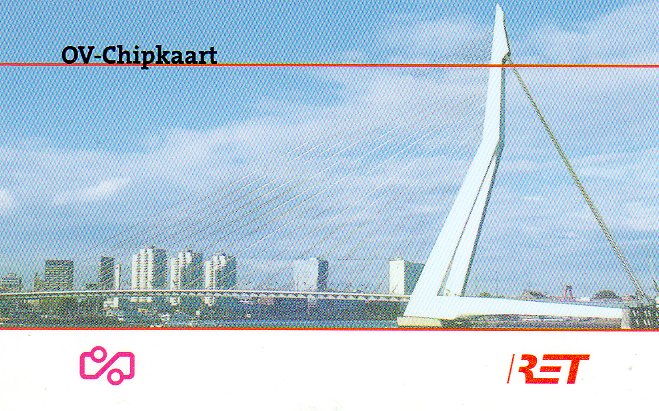
Usage
Travellers have the possibility to use a travel product (like a year pass) or credit for 'pay as you go'. Travelling by credit means the smart card is used as an electronic wallet. By touching in and out the fare of the ticket will be charged. A travel product can be like a year pass, a day rover or a single ticket. By touching in and out the validity of the travel product will be checked. When the travel product is invalid for (part of the) journey, credit will be charged for the remainder of the journey.
The OV-chipkaart integrates ticketing on all modes of public transport in the Netherlands. However, it does not integrate fares.
Touching in and out
Depending on the mode of transport the passenger touches in and out in the vehicle or at the platform/station.
bus and tram:
- touch in when boarding the vehicle
- touch out when leaving the vehicle
- If the passenger changes to another vehicle he touches out in the first vehicle and touches in in the second vehicle.
train, metro and tram:
- touch in when entering the platform or station
- touch out when leaving the platform or station
- If the passenger changes to another vehicle and the transport company stays the same, touching out and in isn't required. If the passenger changes to another vehicle and the transport company changes as well, the passenger is required to touch out at the validators or gates from the first company and to touch in again at the validators or gates from the second company. A higher fare will be deducted of the credit on the card if the passenger touches out and in in the wrong order.

process flow OV-chipkaart ©
Gates
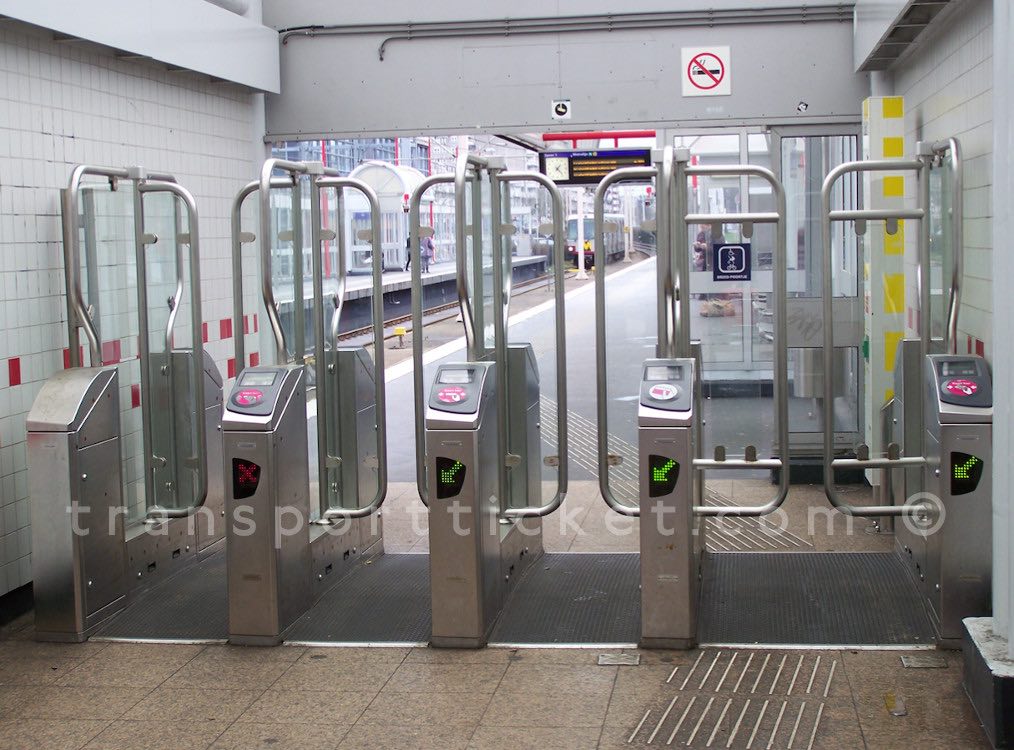
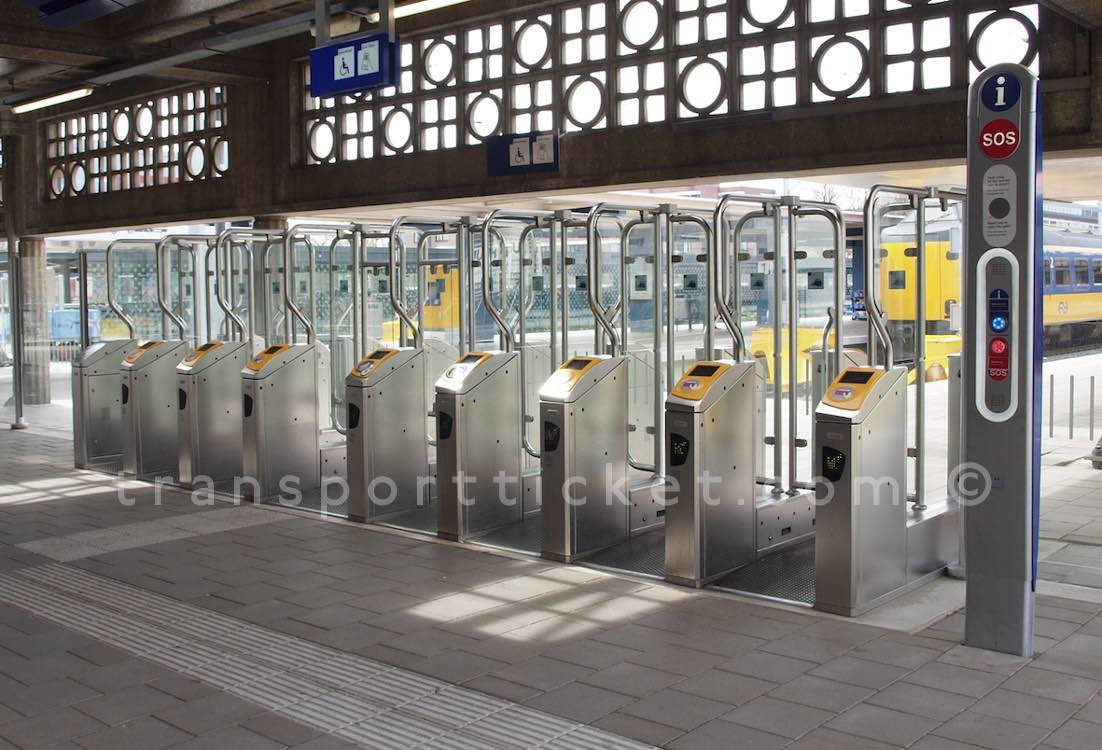
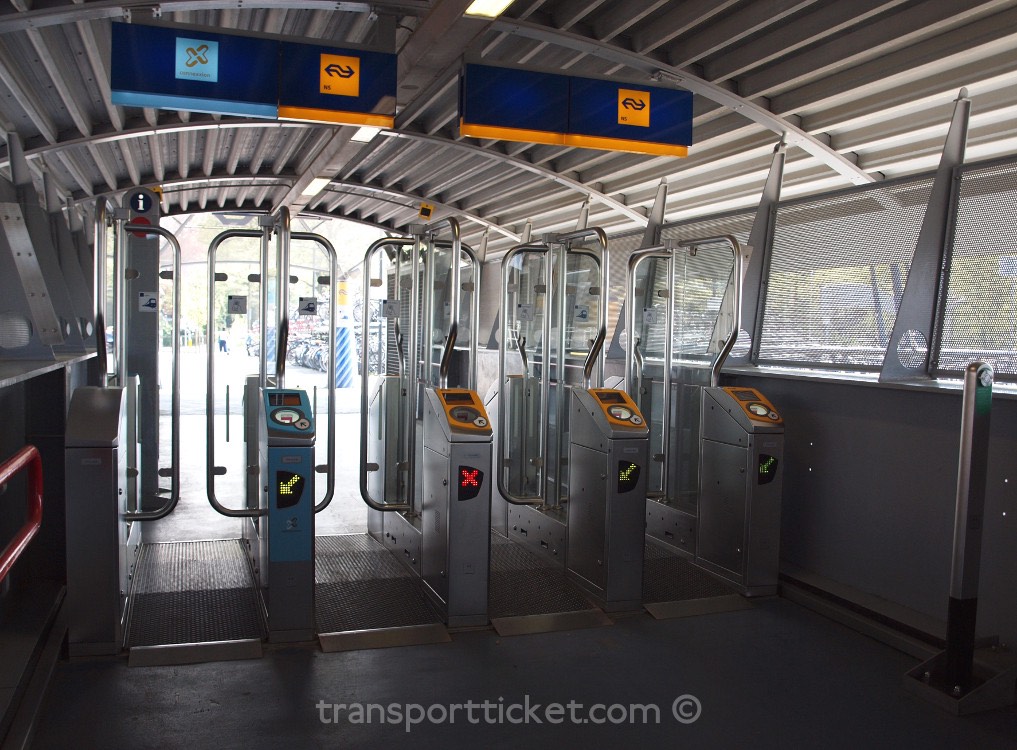
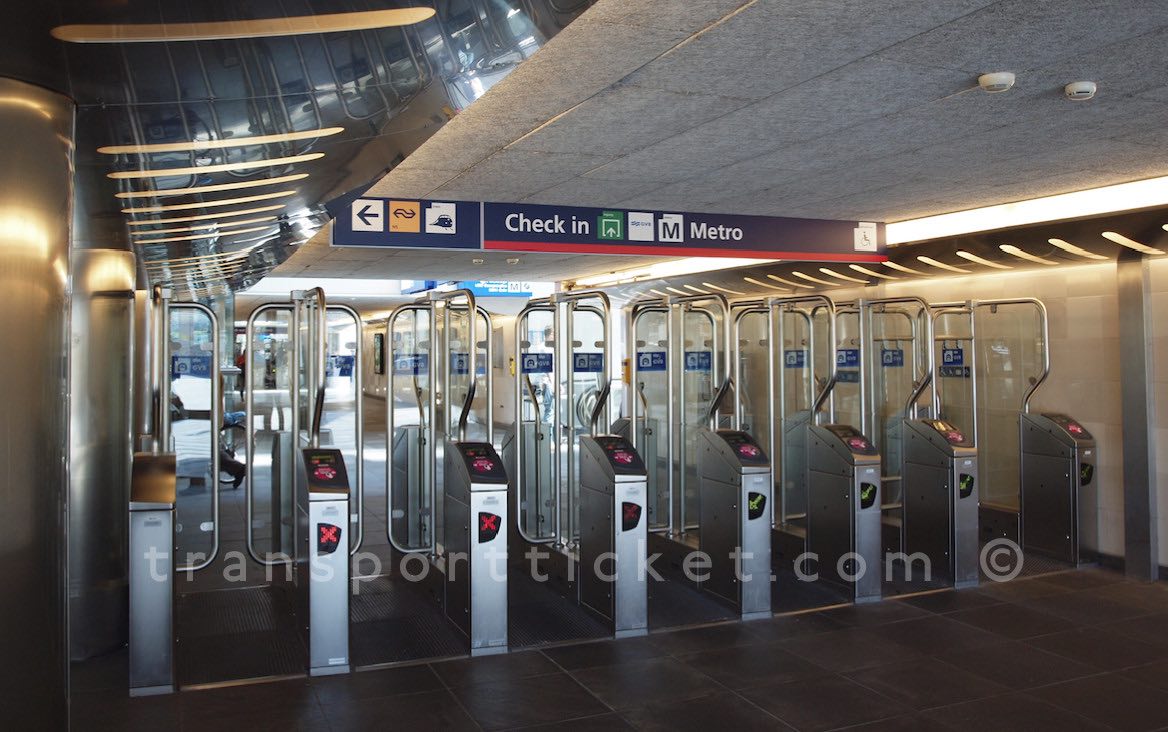
At most subway stations in Rotterdam and Amsterdam and several Dutch railway stations ticket gates have been installed.
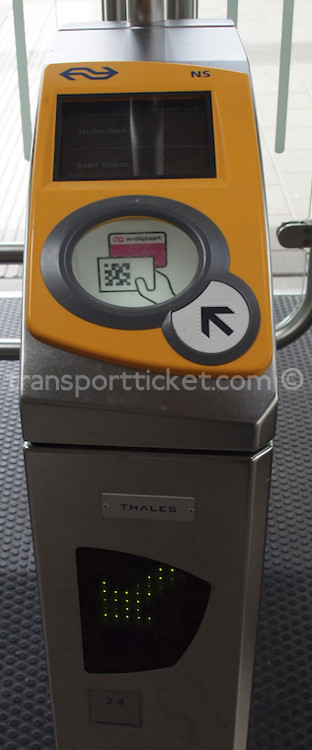
NS ticket gates have barcode scanners for:
- e-tickets, printed or on a mobile phone
- international paper tickets with a QR-code
- key cards (for international travellers using a ticket without a QR-code).
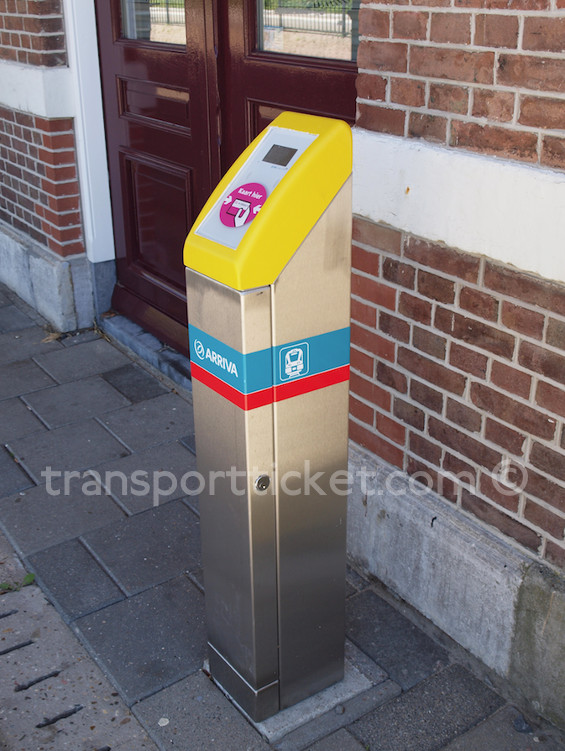
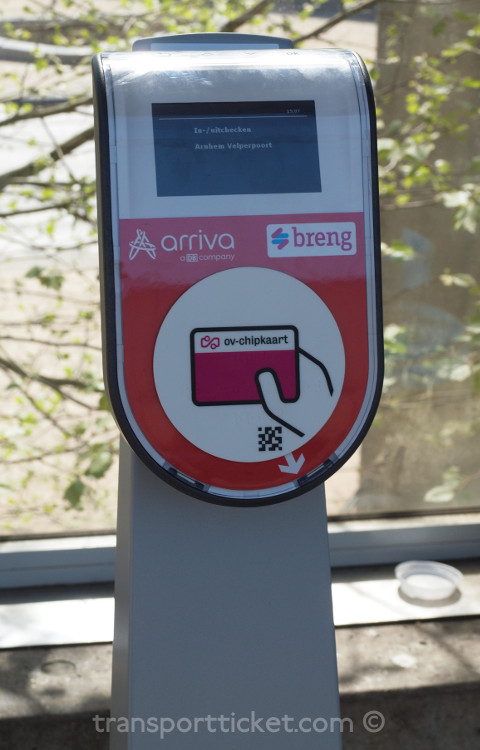
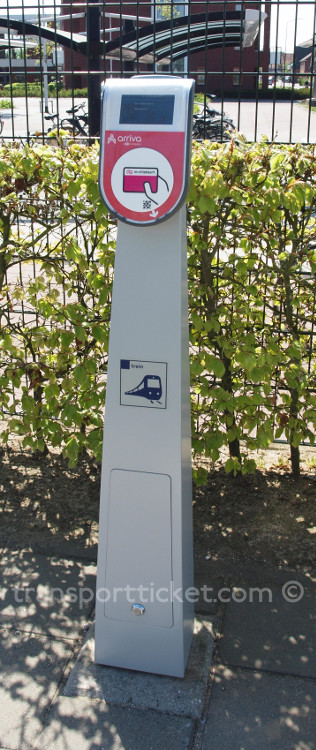
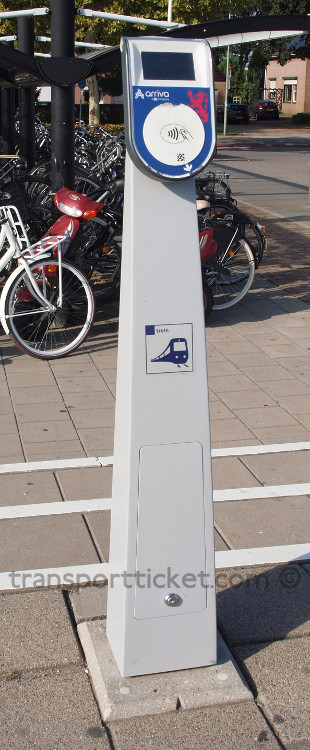
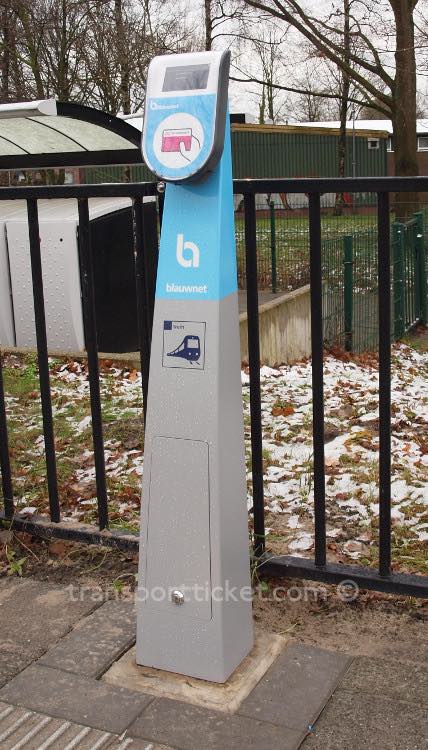
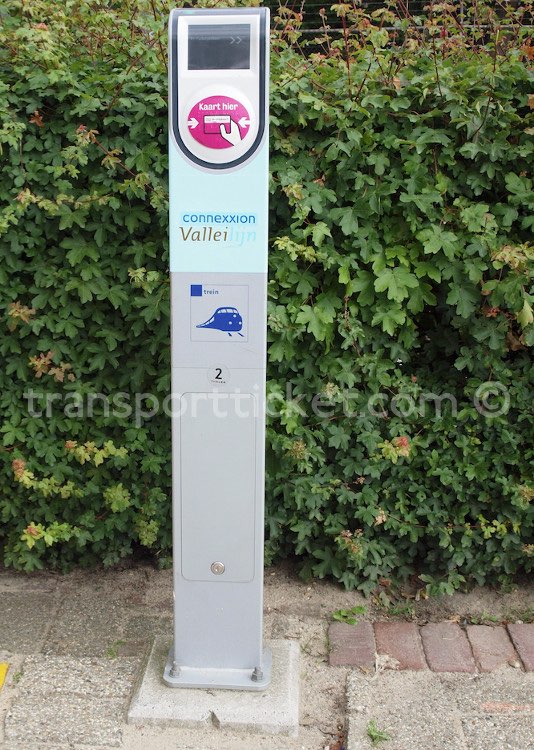
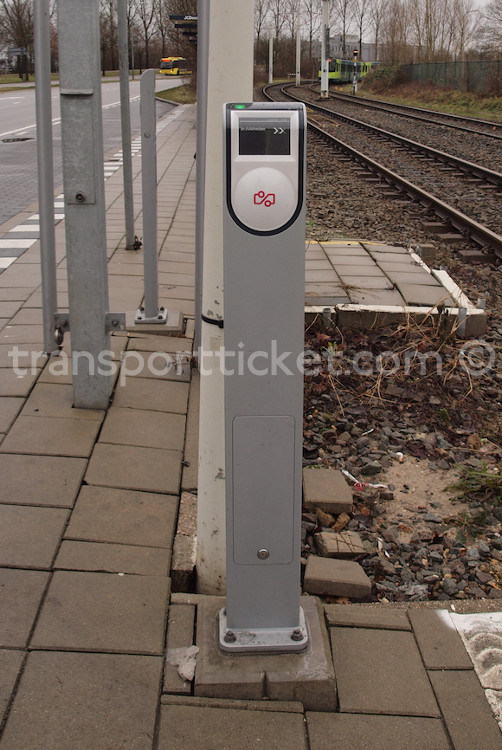
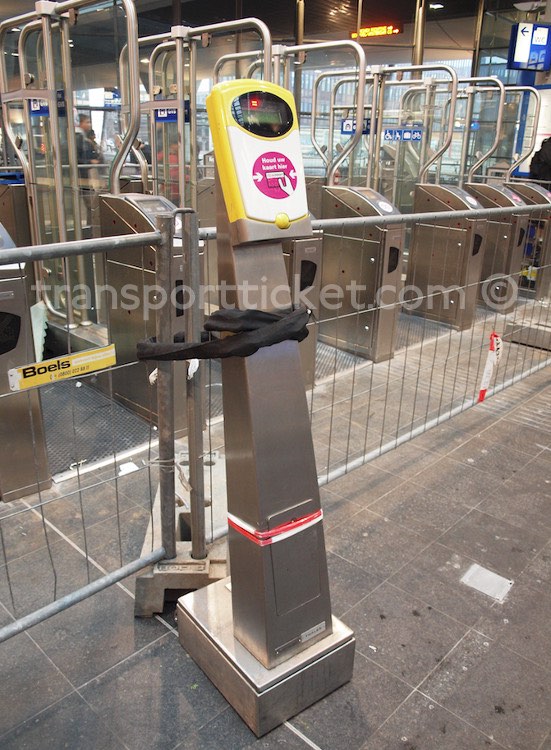
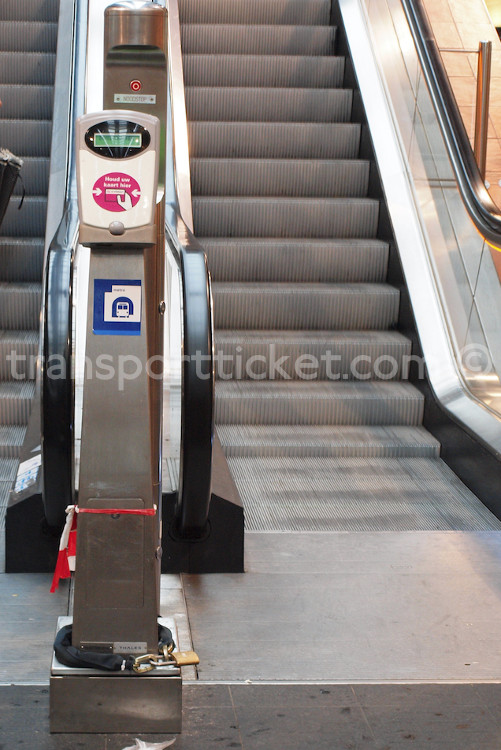
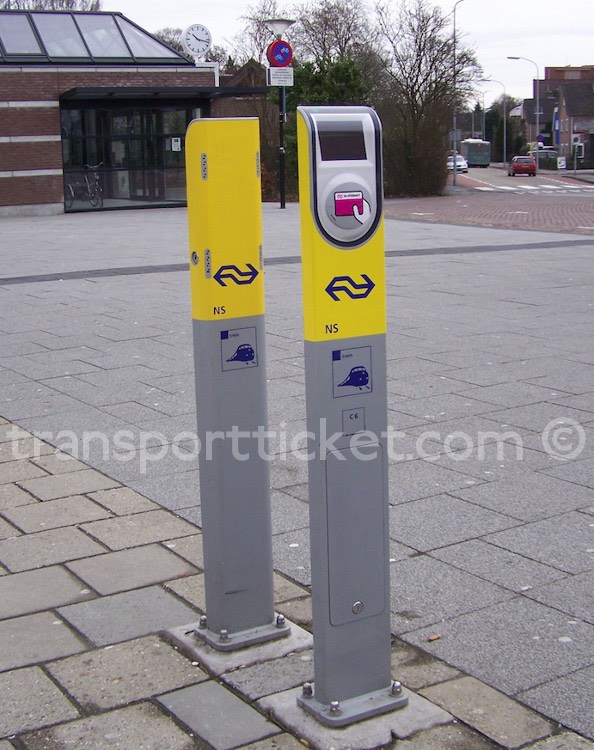
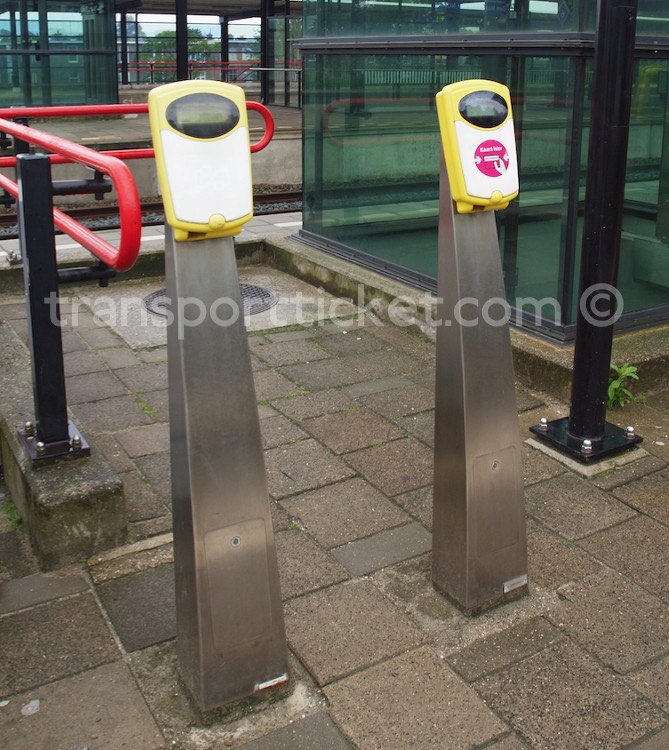
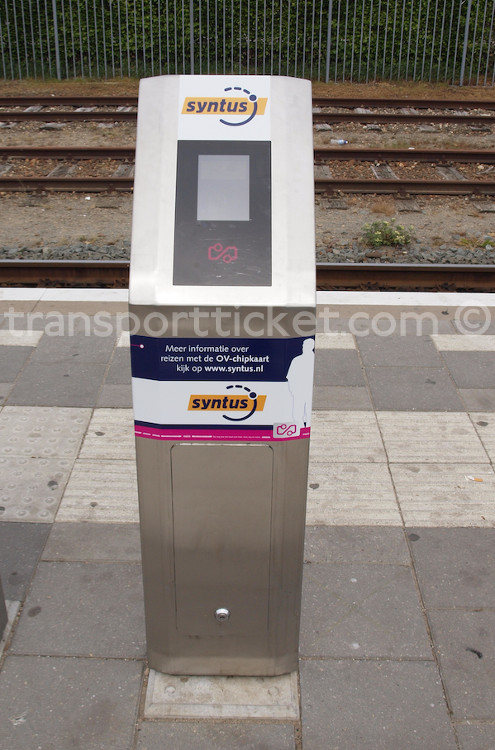
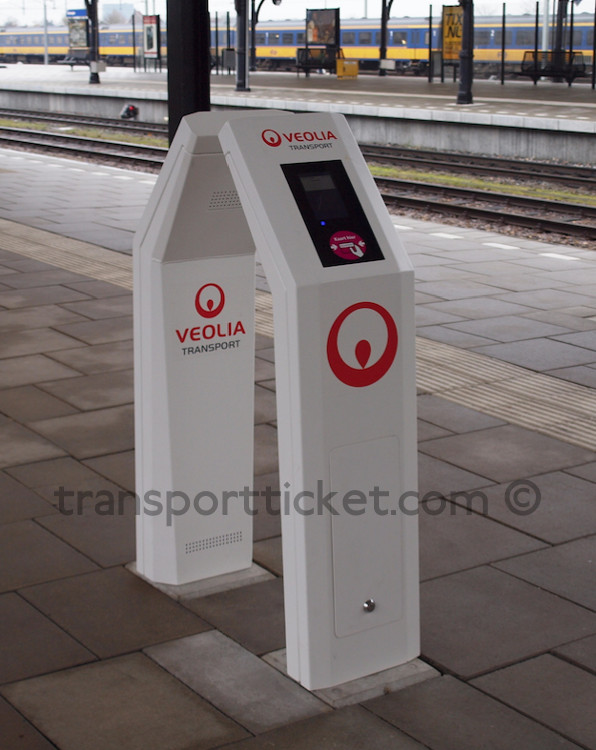
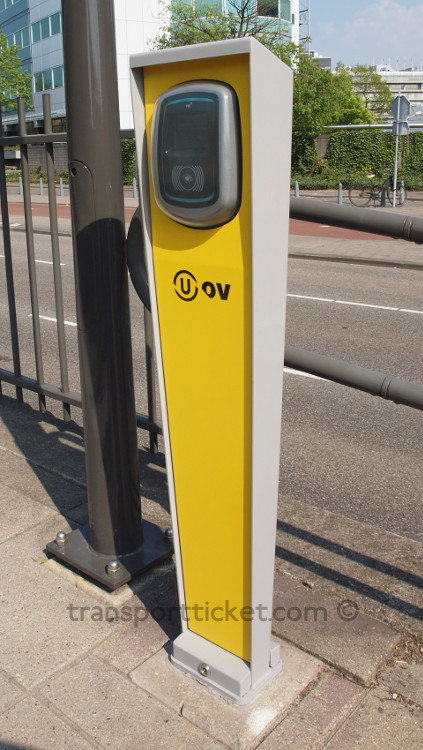
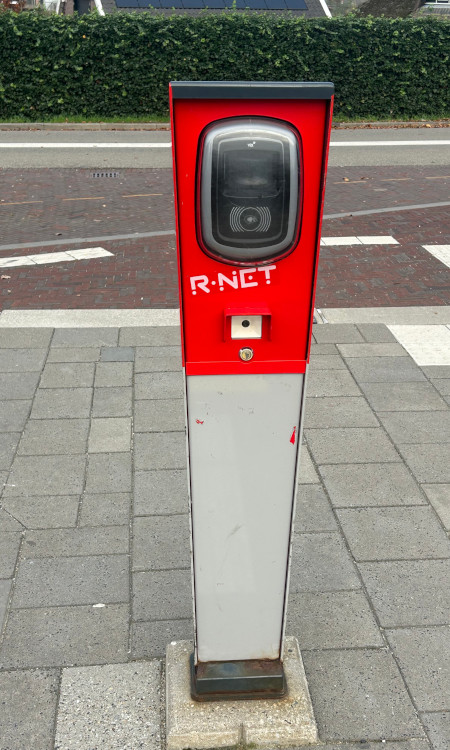
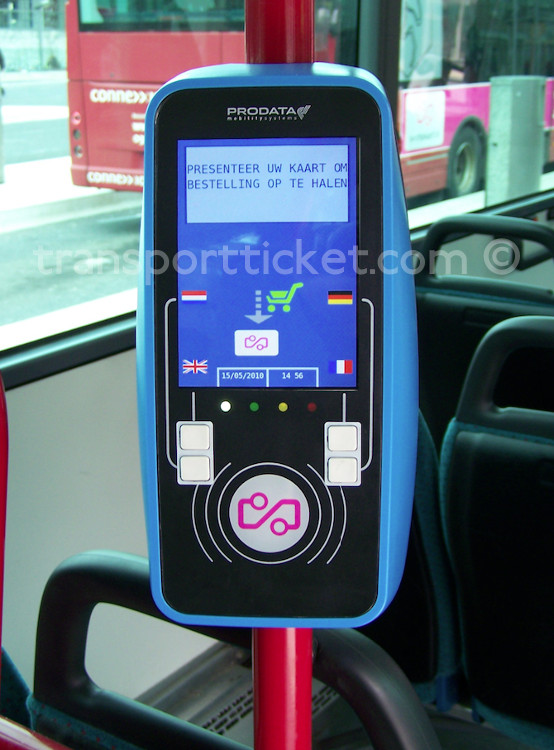
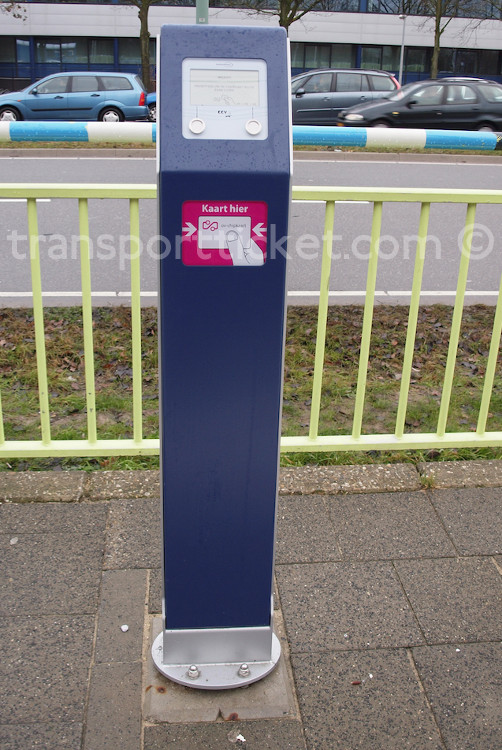
Validators at the platform
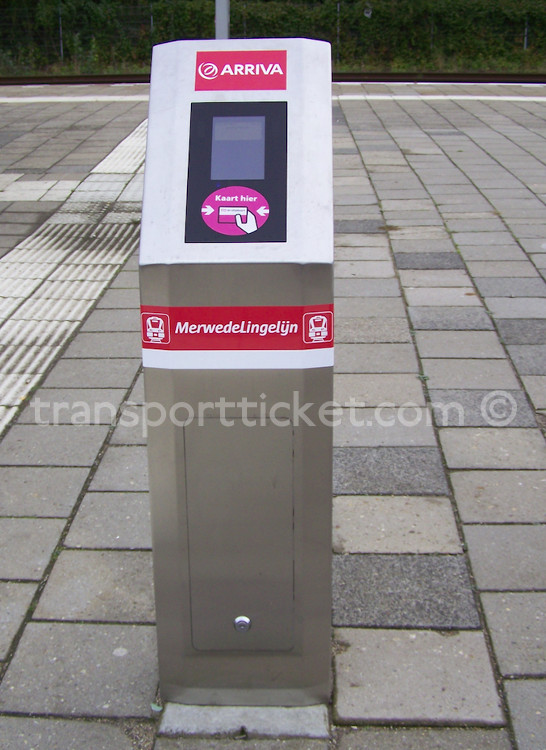
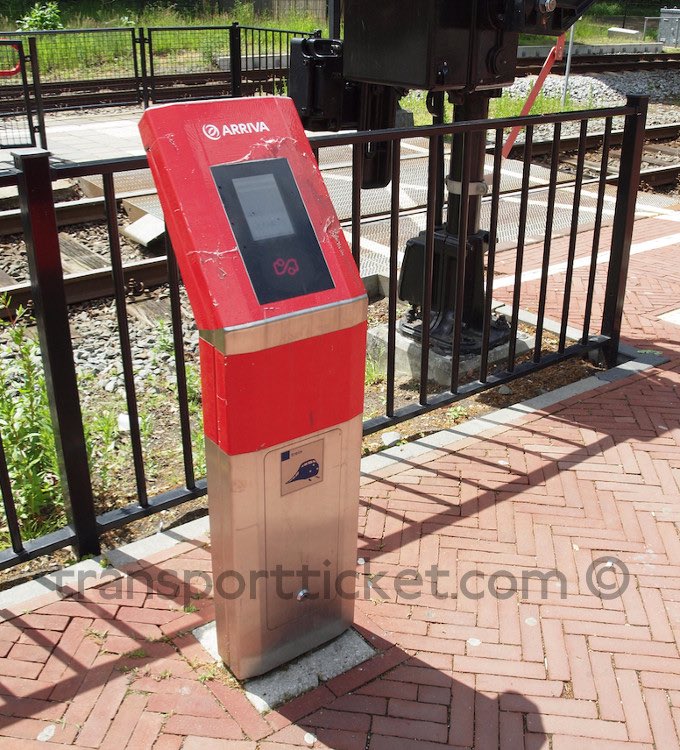
Validators have been placed at stations without gates for touching in and touching out.

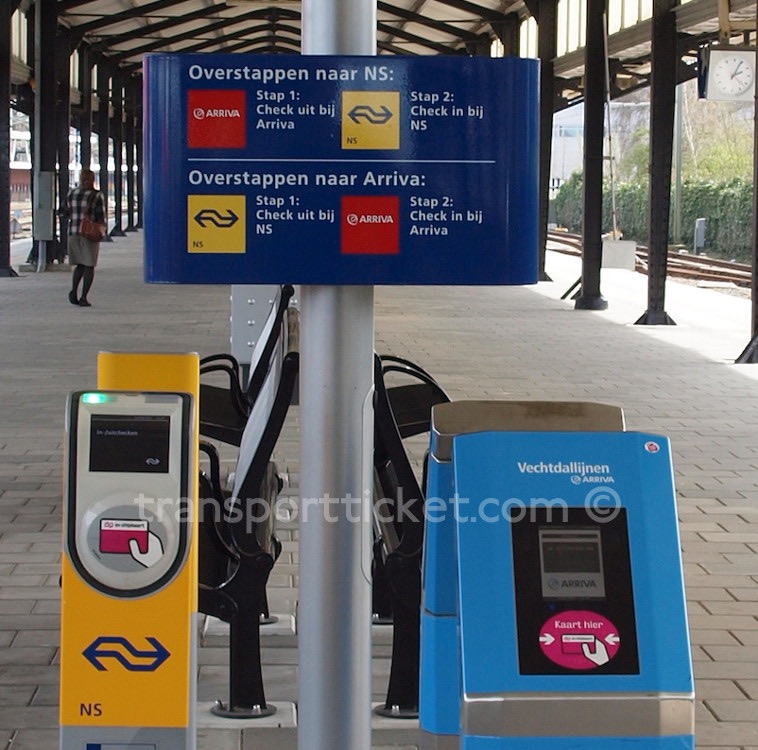
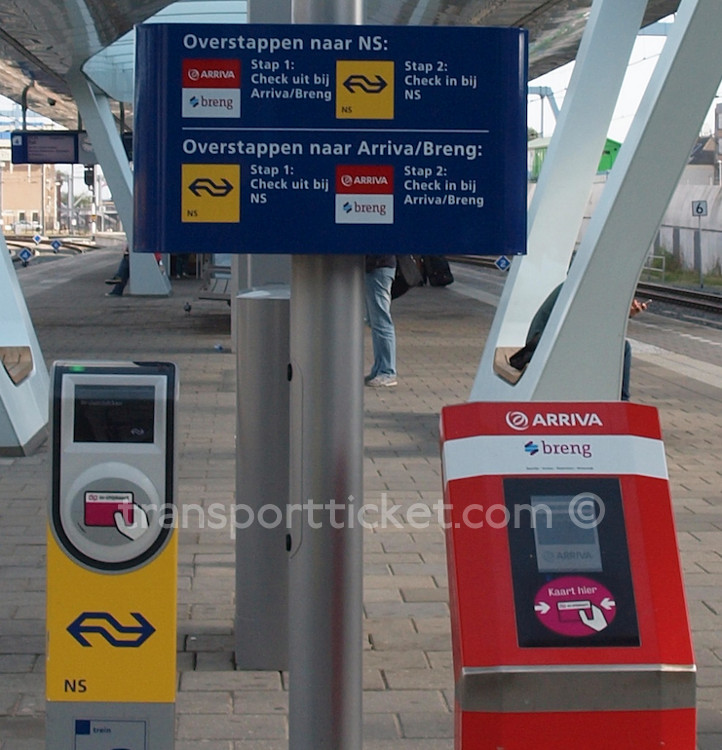
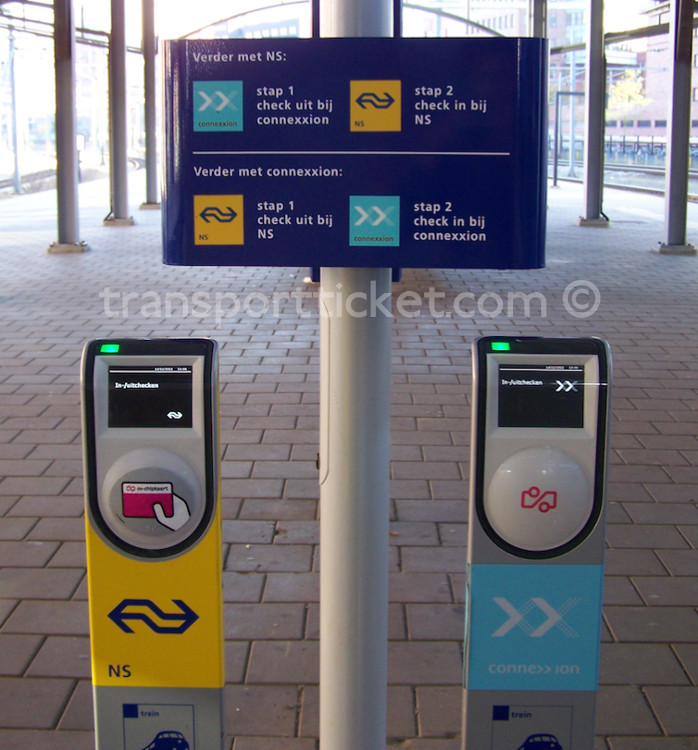
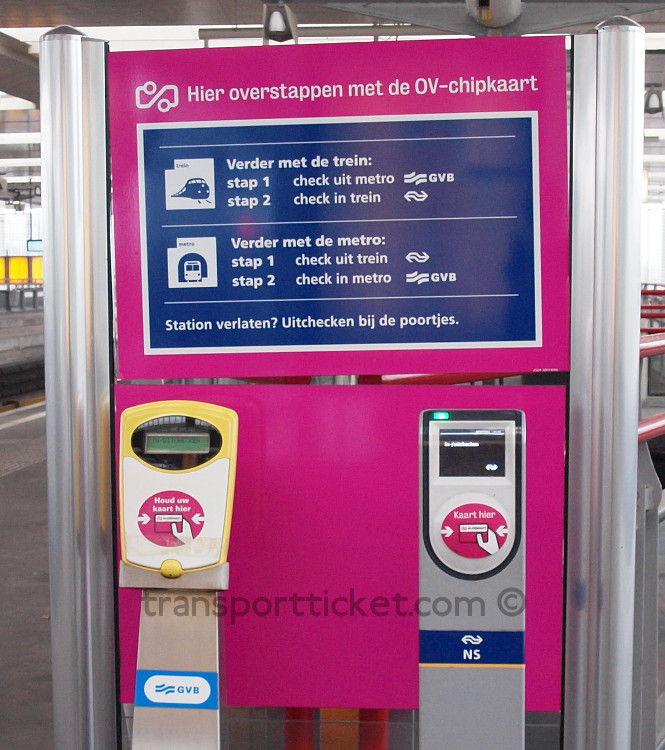
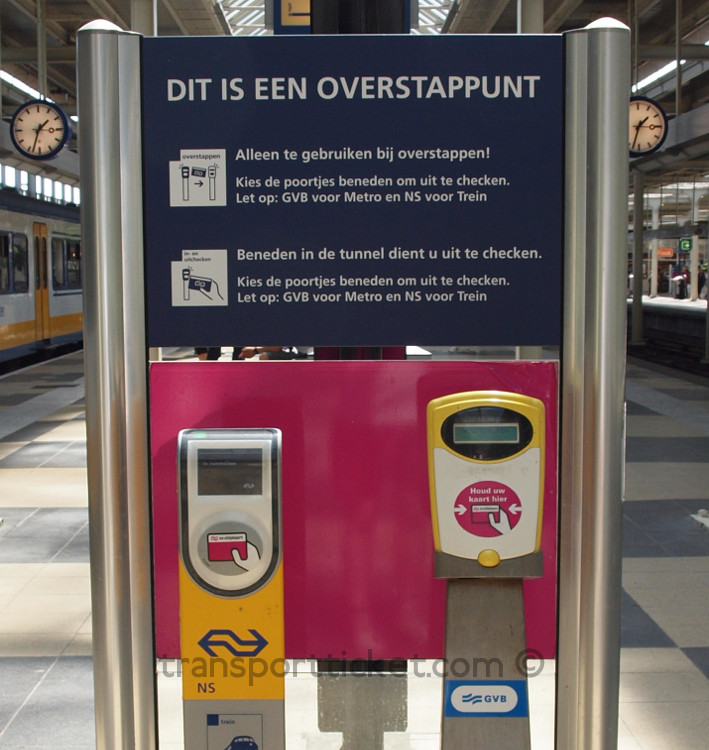
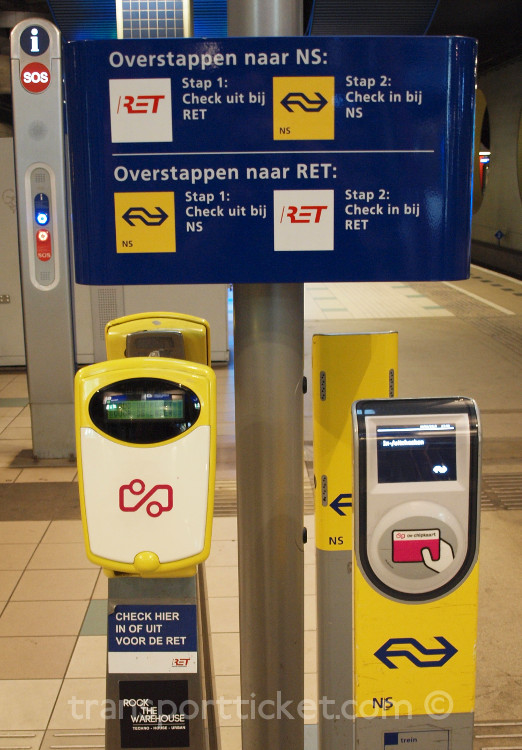
Transfer points
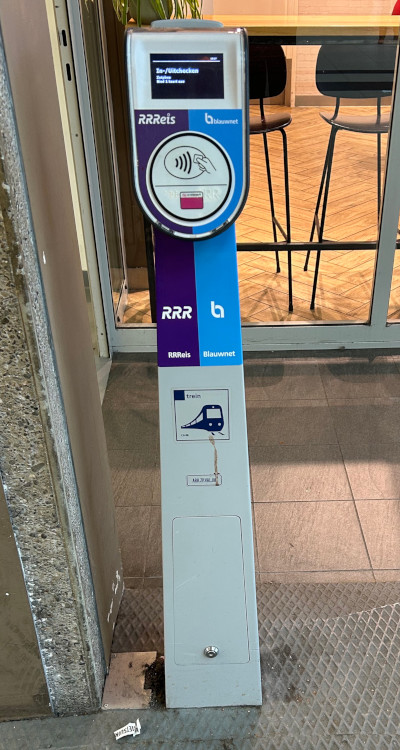
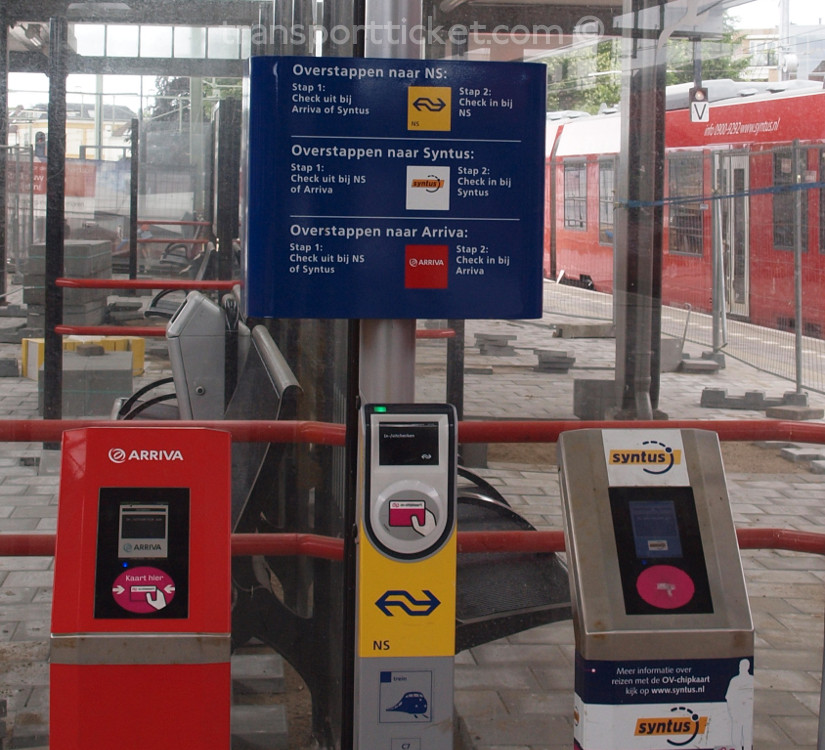
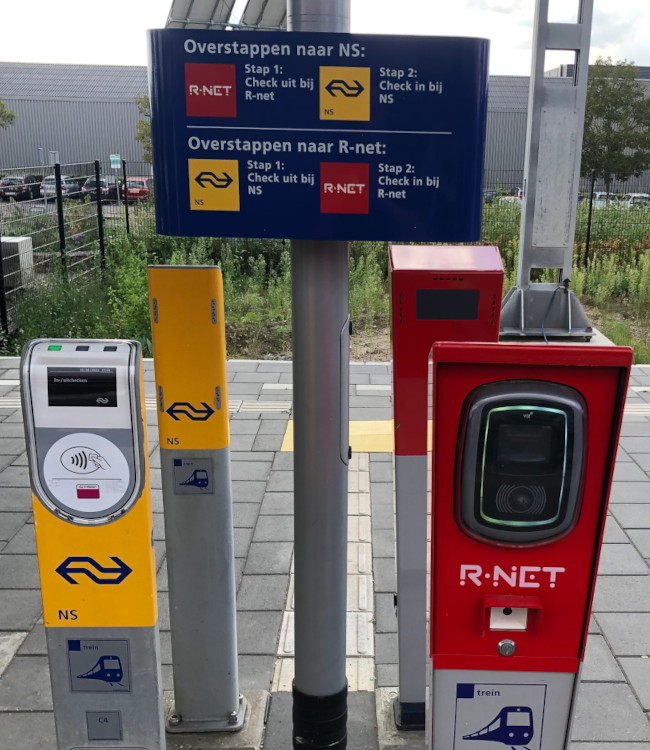
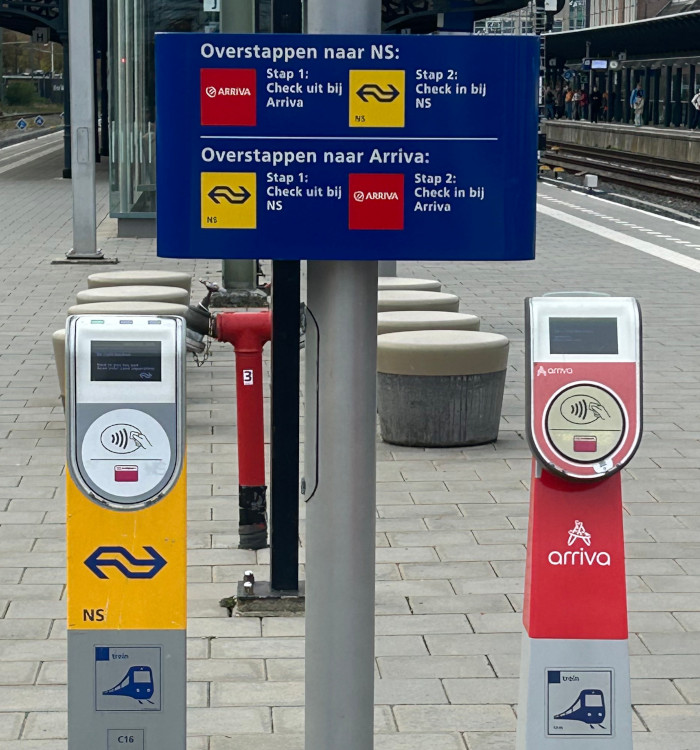
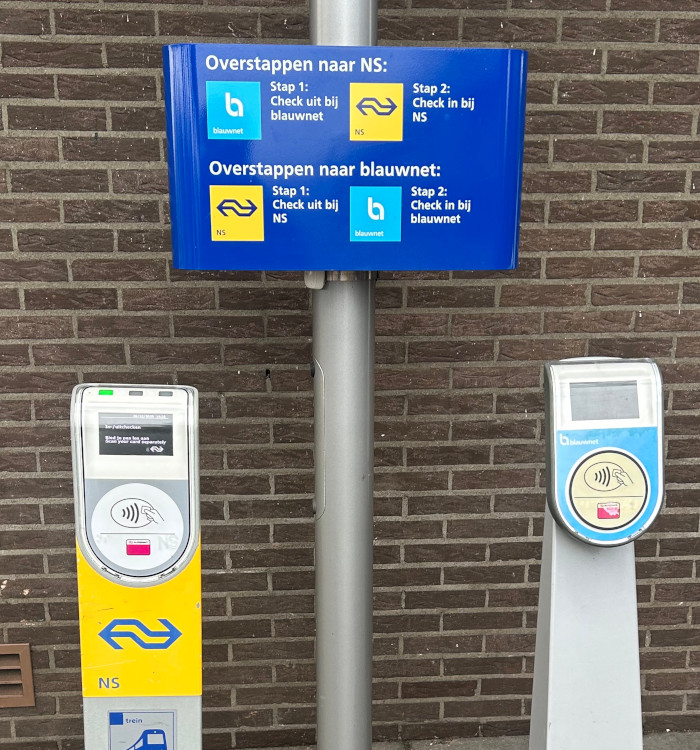
If a traveller changes transport company during his trip, he has to check out at the validators of the first company and check in at the validators of the second company.
Only Zutphen station had transfer points for three railway companies. Initially for NS, Syntus and Arriva and later for NS, Blauwnet and Arriva. As of December 2025 the Arriva lines were renamed to RRReis, although still operated by Arriva. For RRReis and Blauwnet, both product names of several Dutch provinces, the same validator is used.
There are a couple of other stations where trains of three or more different companies depart. However in these cases some of the railway companies use the same validator as well. The result is a transfer point with only two different validators.



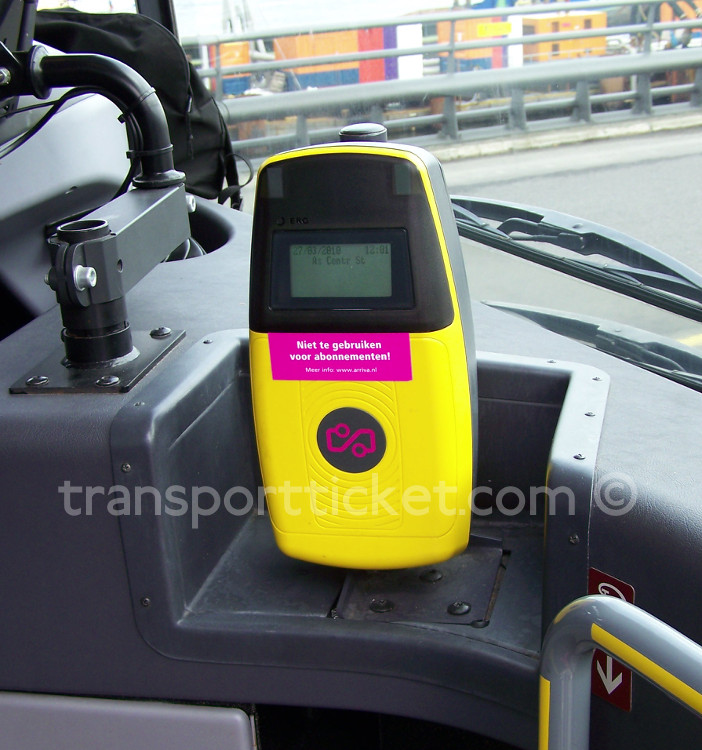
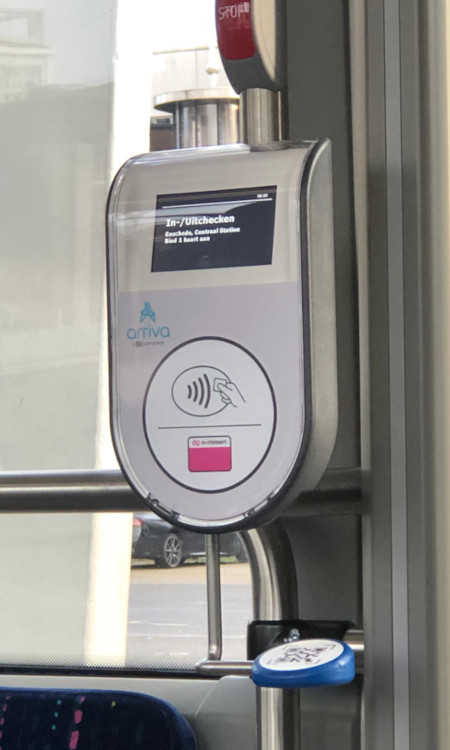
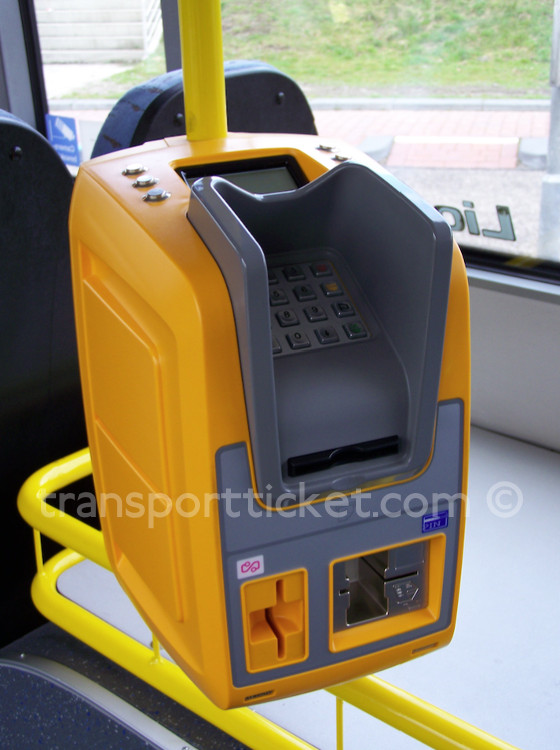
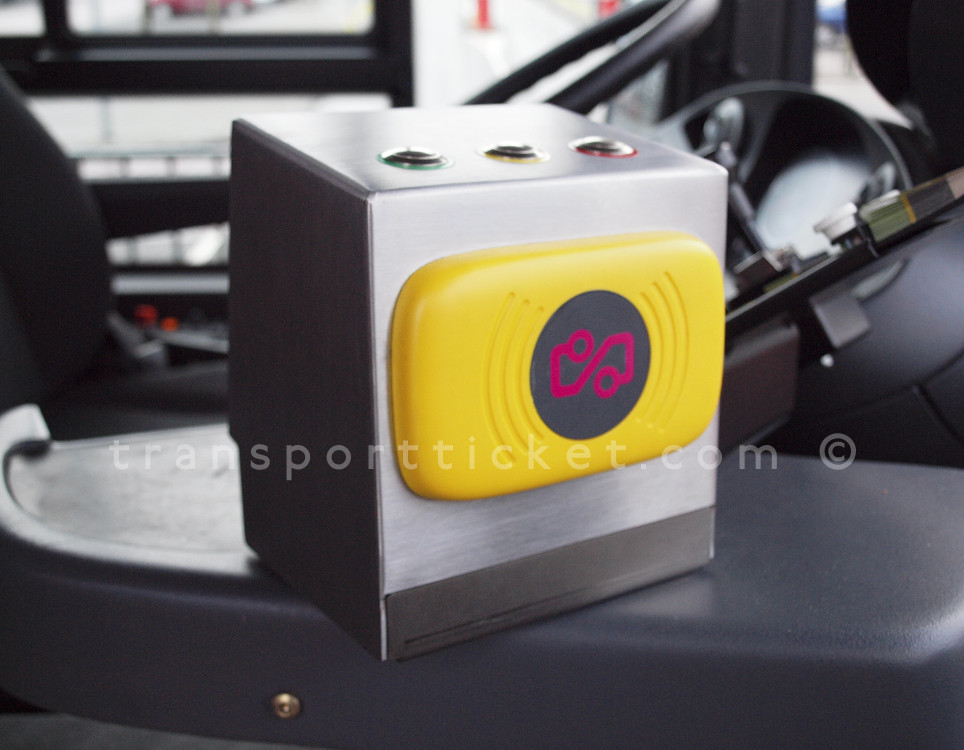
Validators in bus and tram
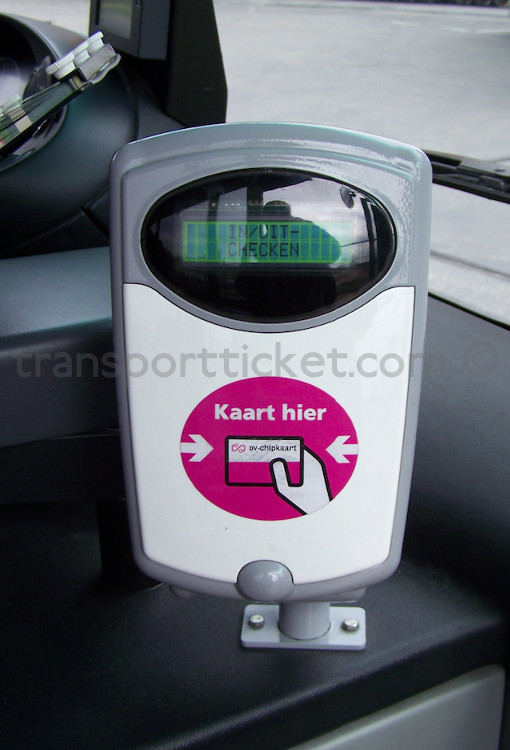
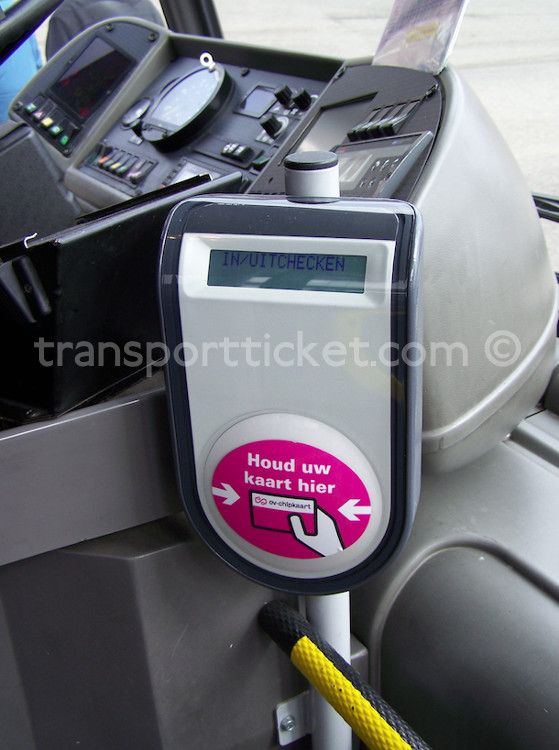
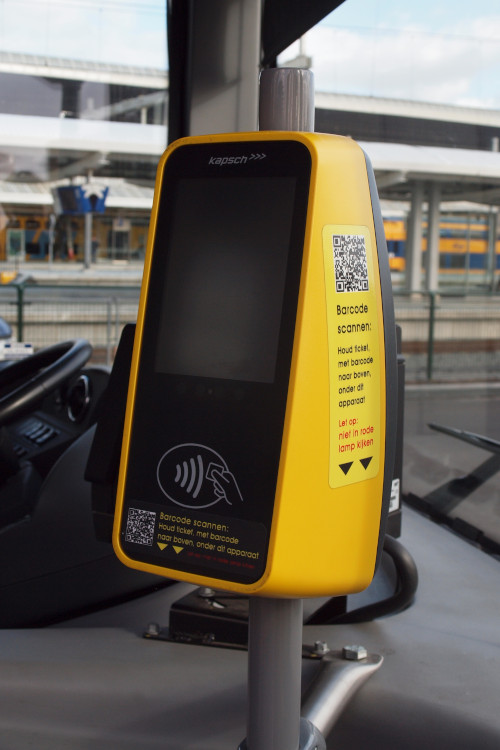
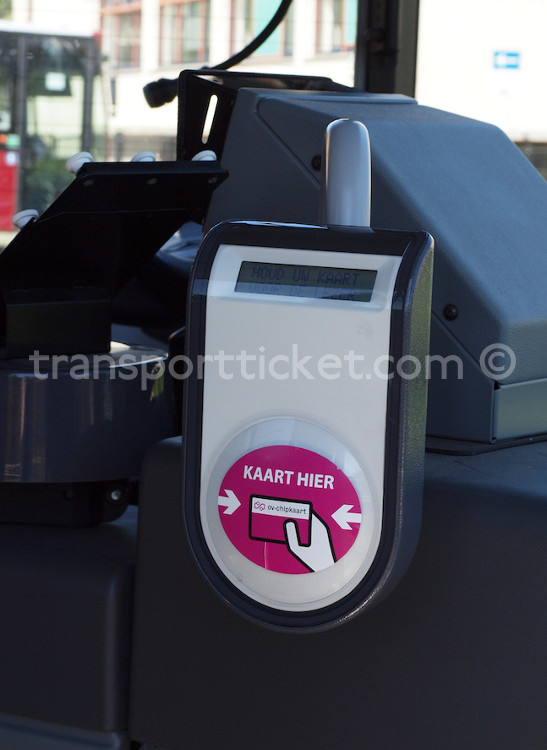
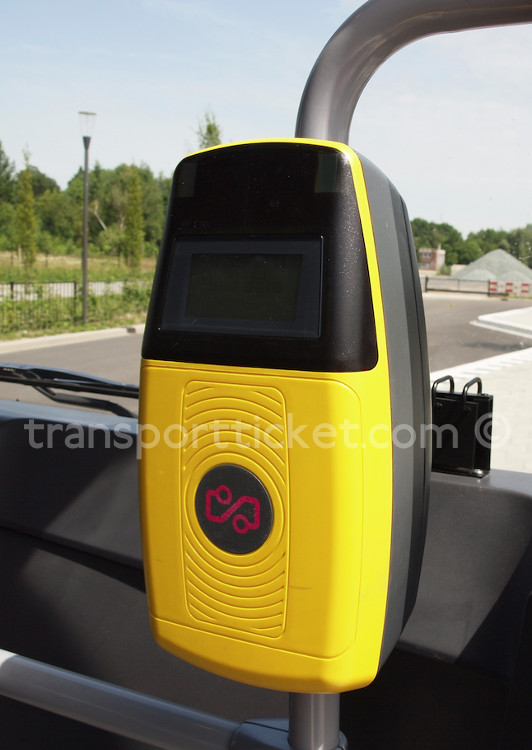
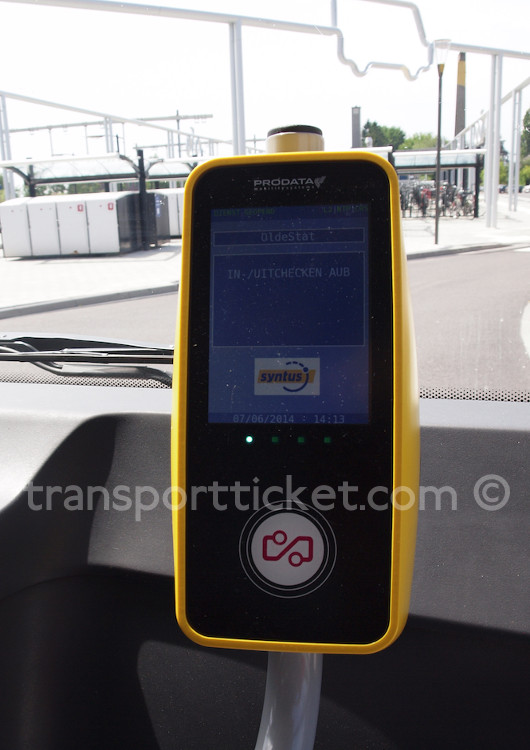
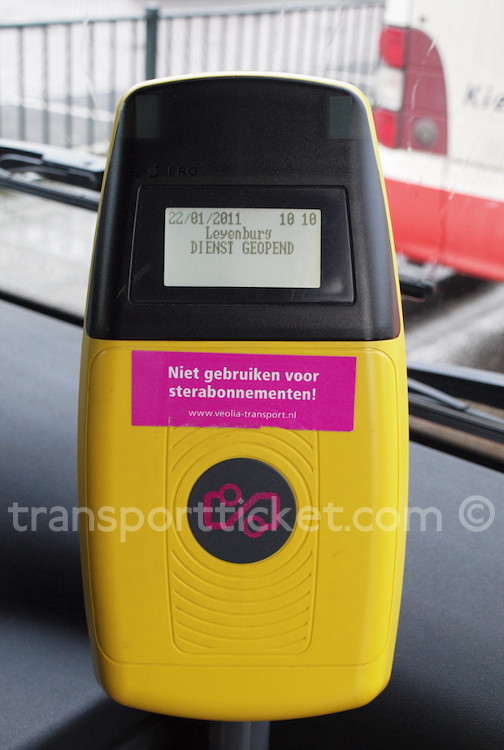
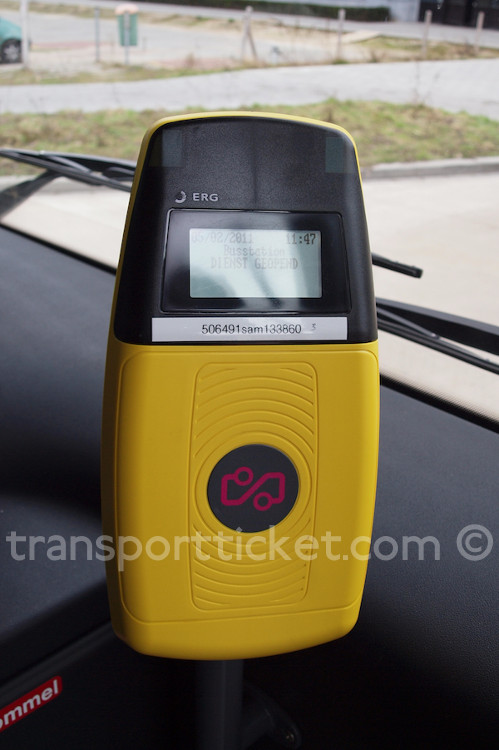
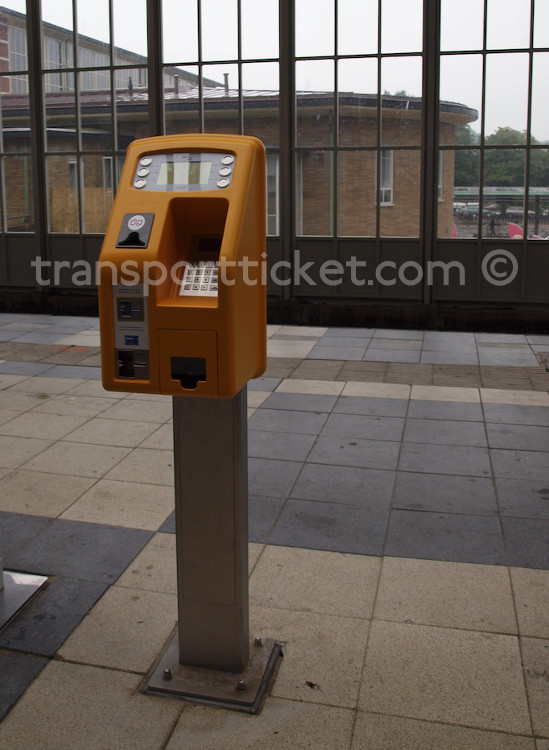
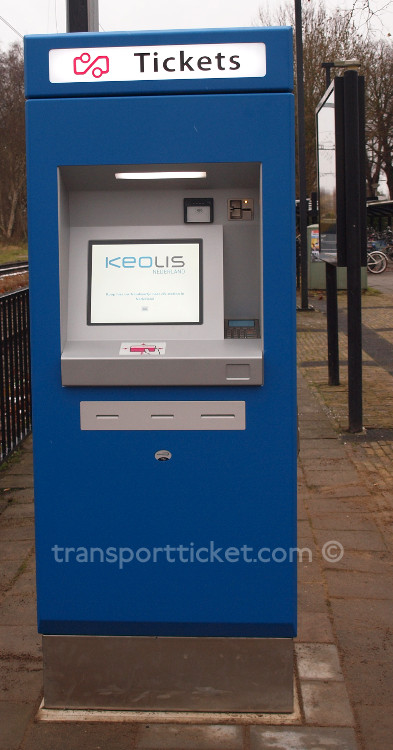
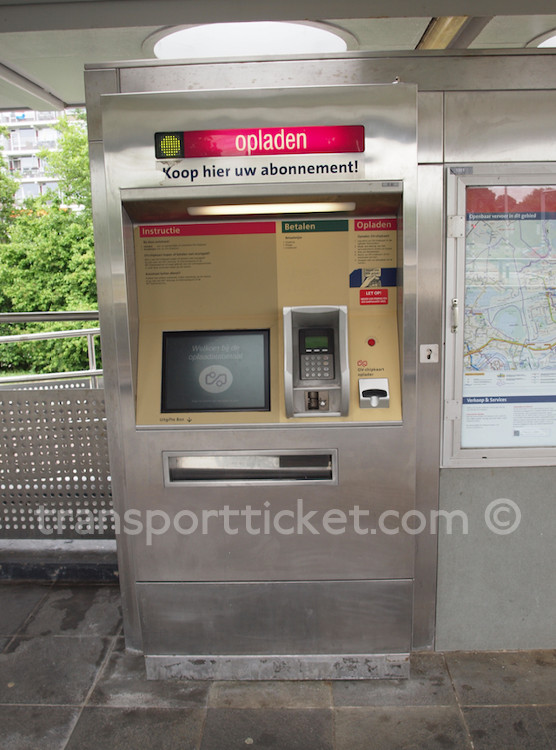
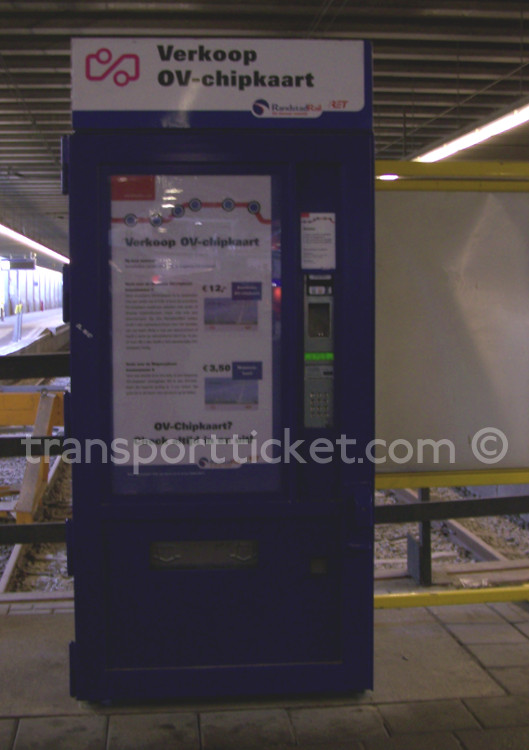
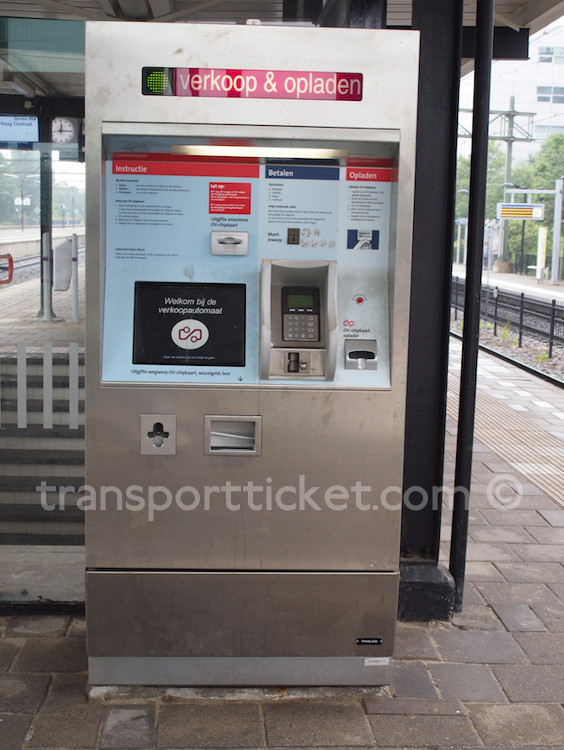
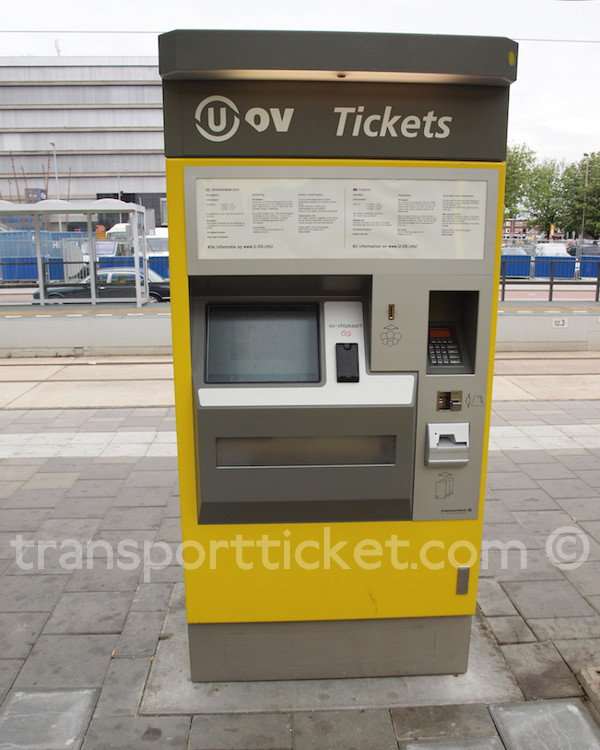
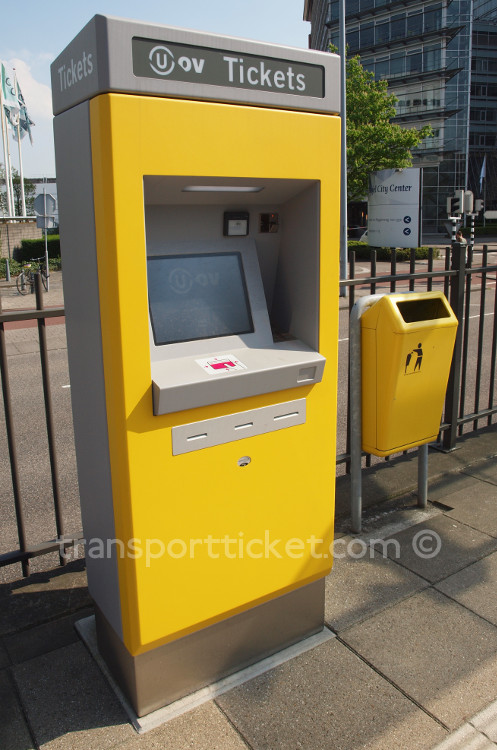
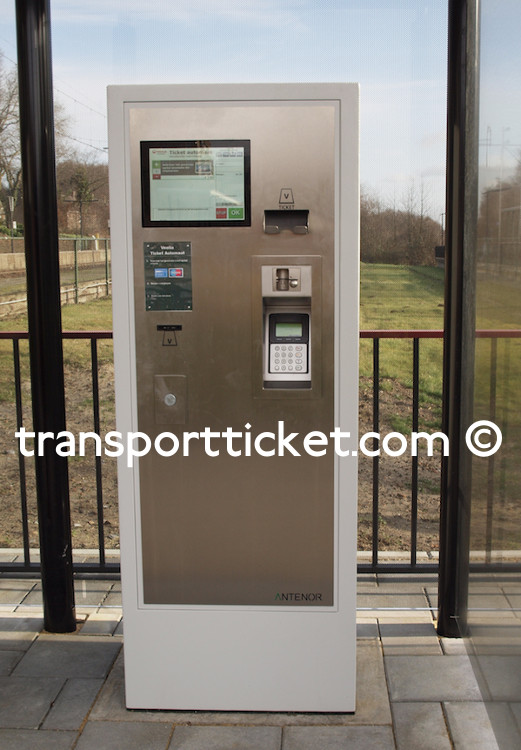
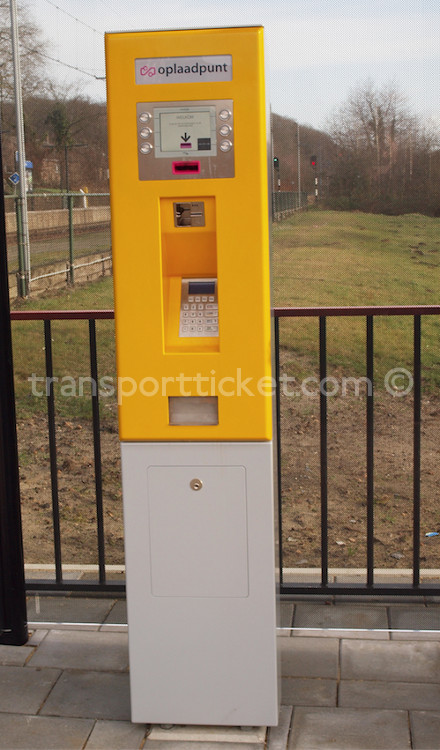
Vending machines
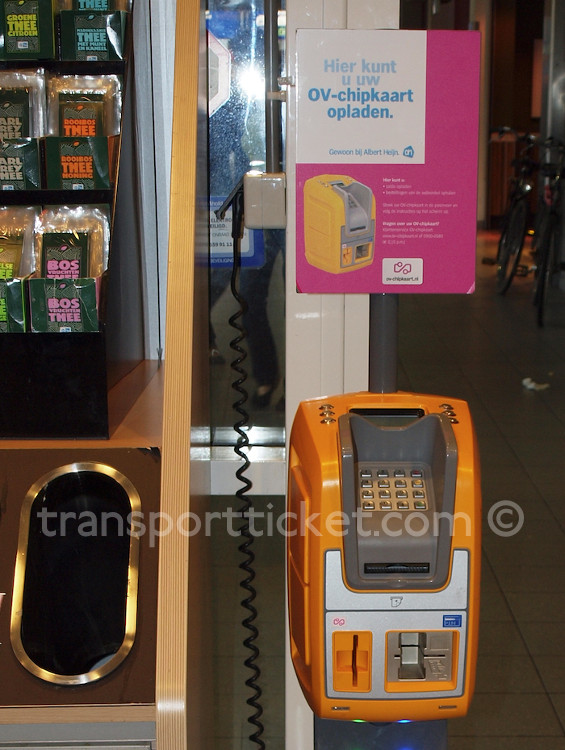
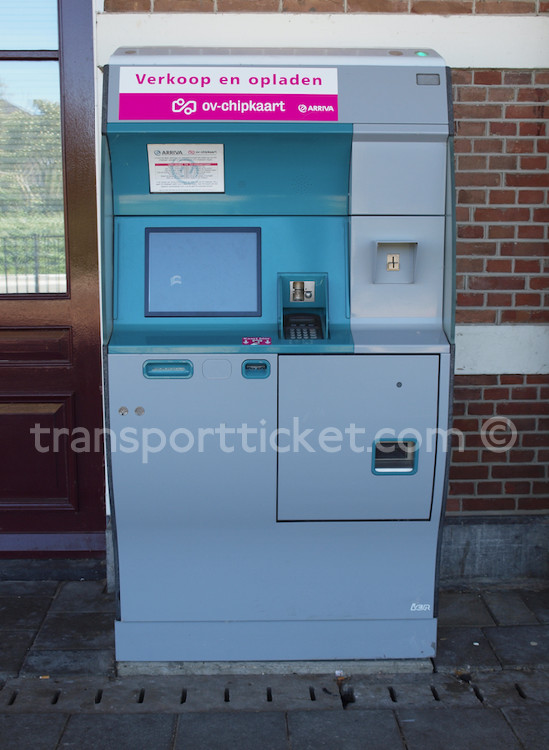
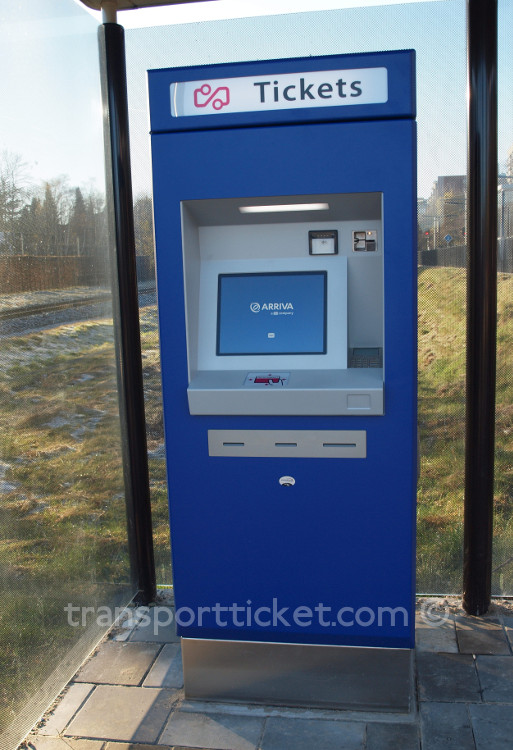
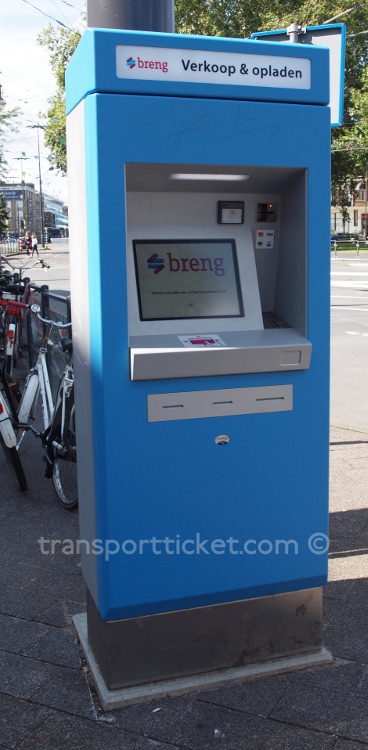
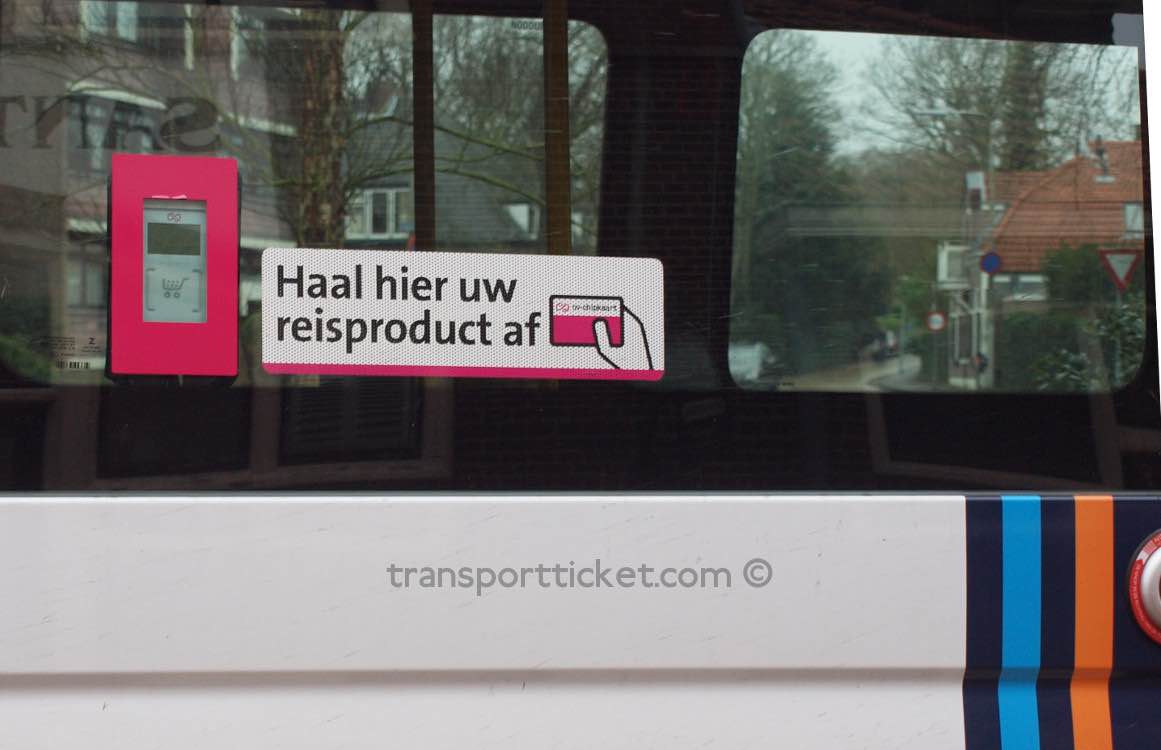
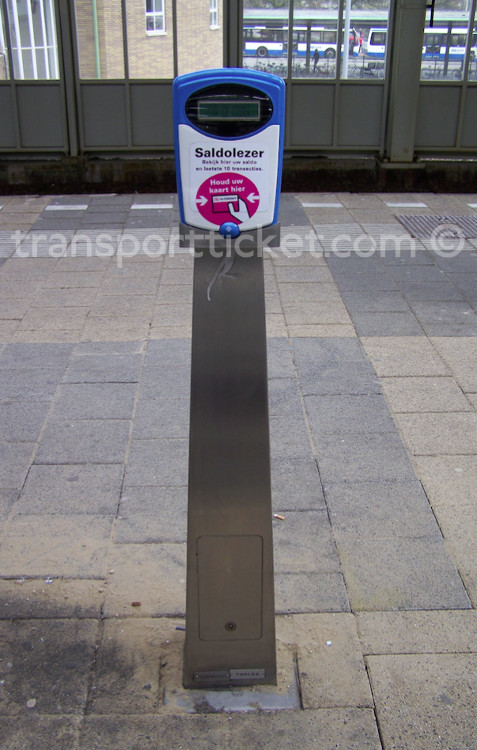
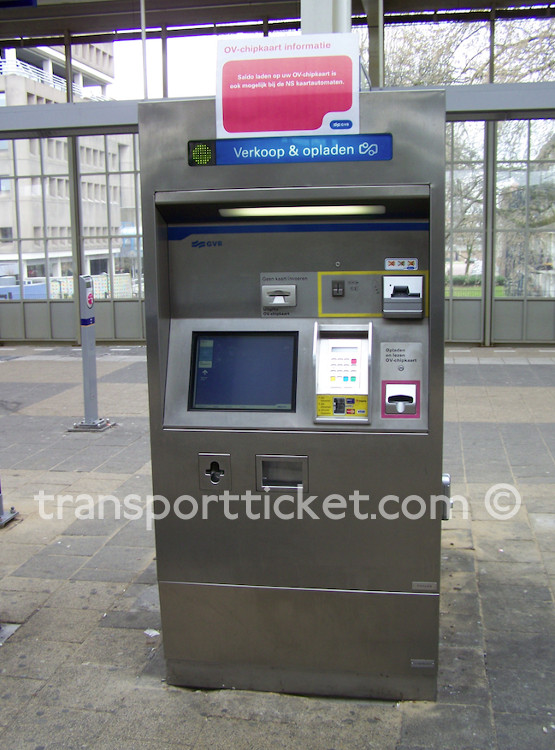
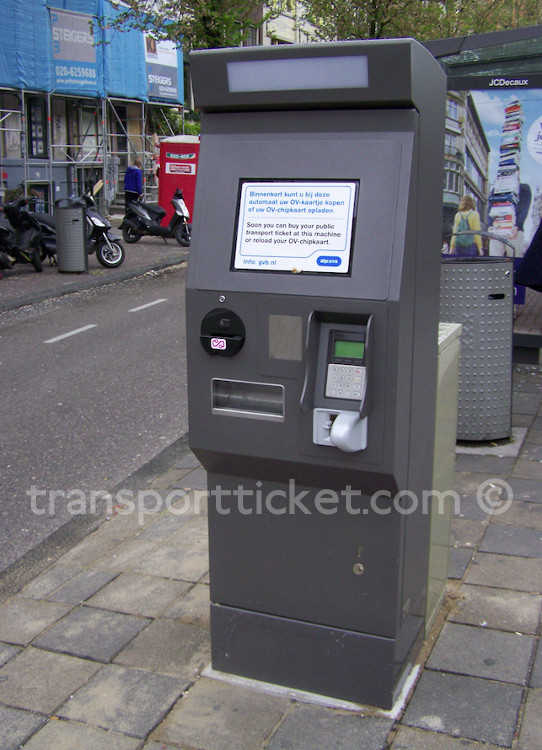
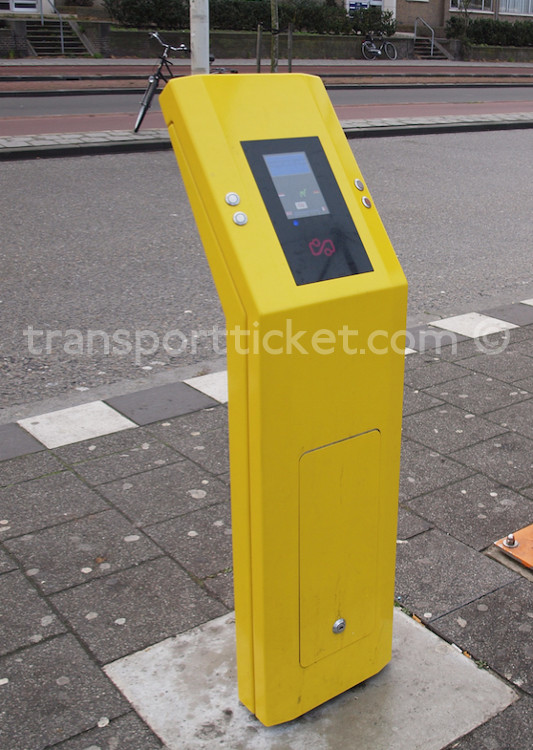
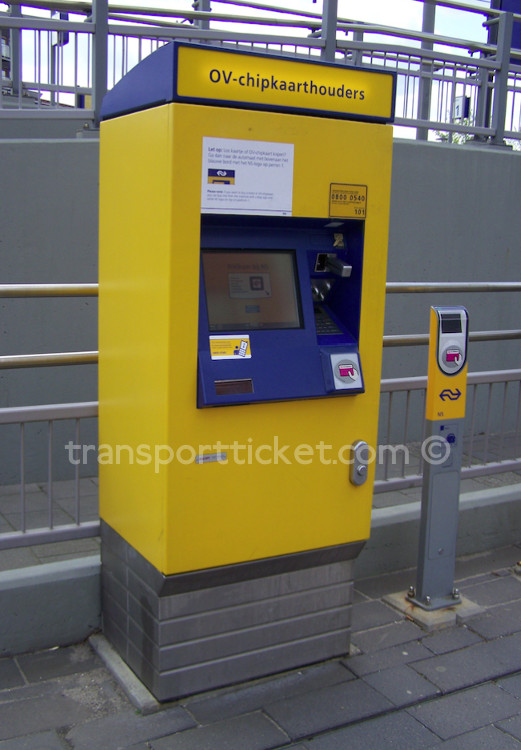
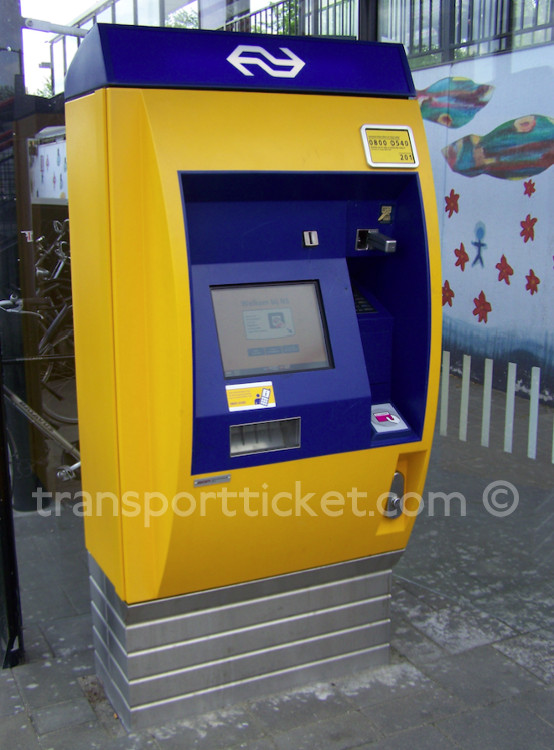
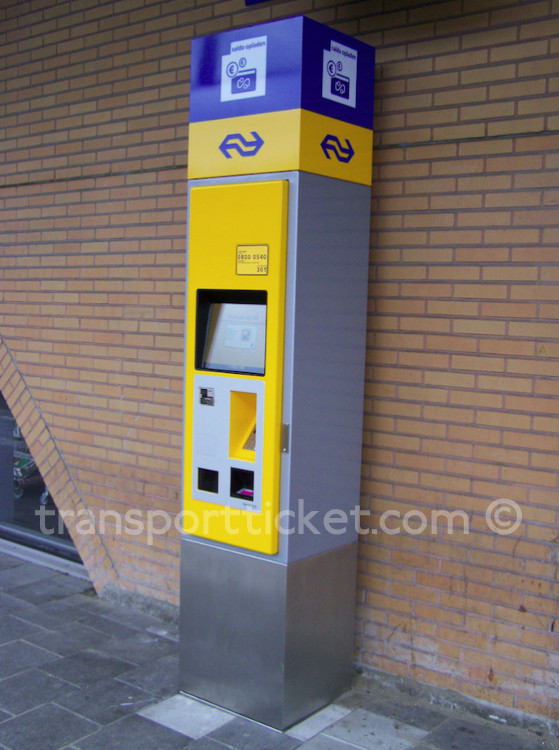
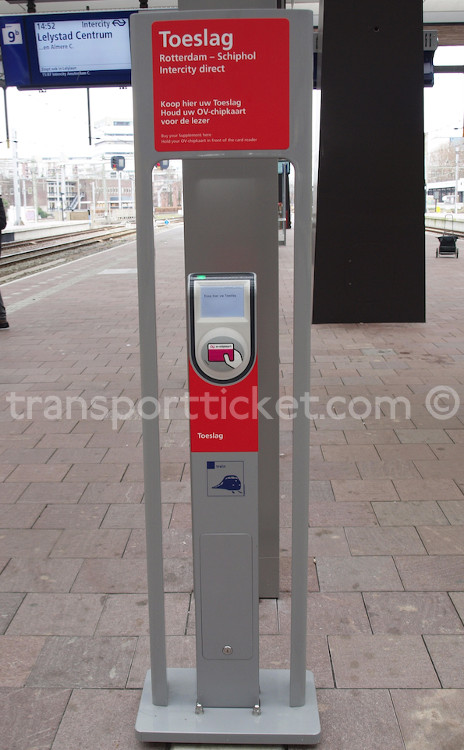
Besides validators there are machines with other functions. The traveller can...
- buy an anonymous OV-chipkaart
- top-up credit
- activate an on-line purchase
- buy a travel product
- read the stored credit
- read the travel history
Not al machines have the same possibilities.
Crossing the border
The OV-chipkaart is mainly valid in The Netherlands. There are however some exceptions. The OV-chipkaart is valid on a few bus lines that cross the border, eg from Maastricht to Aachen in Germany.
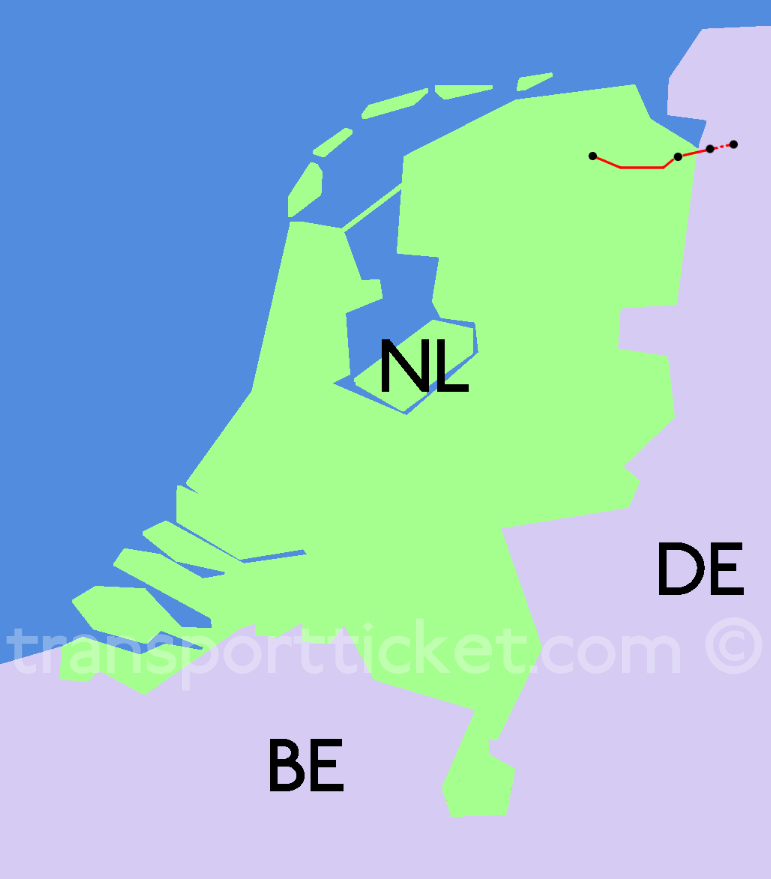
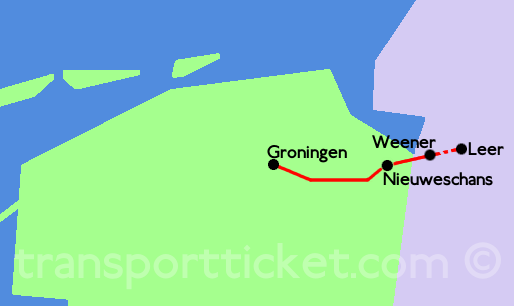
There are several railway stations in Germany that have OV-chipkaart equipment. From the beginning of the OV-chipkaart two stations in Lower Saxony have had OV-chipkaart equipment: Weener and Leer. In December 2015 a ship collided with a bridge on a river between Weener and Leer. As the bridge was heavily damaged, there are currently no trains running to Leer, only replacement buses. it is still unclear when trains can be running again from Bad Nieuweschans to Leer.
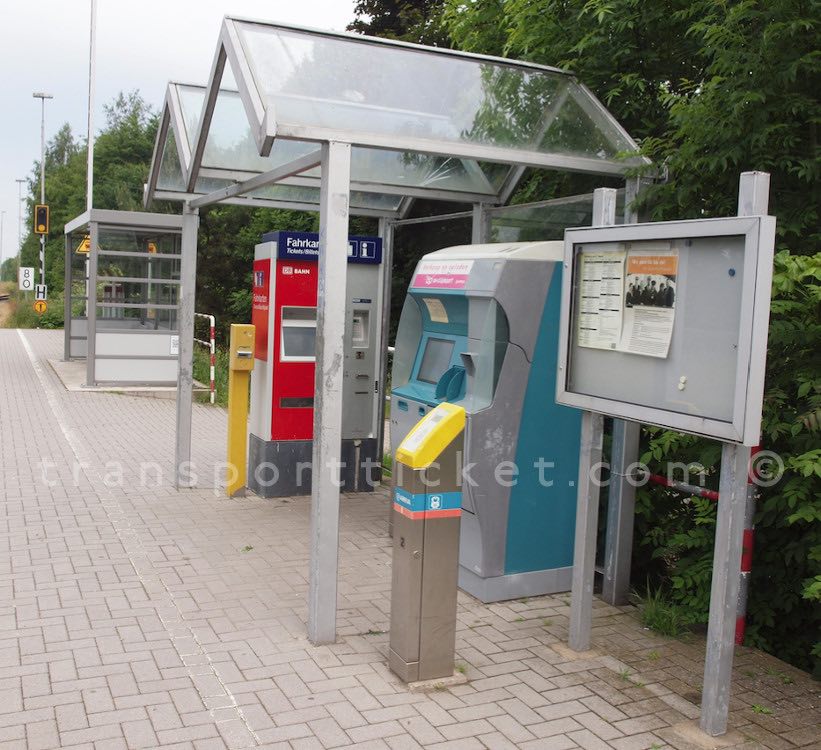
Since than, several more stations in Germany, all in North Rhine-Westphalia, have gotten OV-chipkaart validators.
| date | station in The Netherlands | stations in Germany | company | touching in and out at |
|---|---|---|---|---|
| Groningen | Weener and Leer | Arriva | Arriva | |
| 01-2018 | Maastricht and Heerlen | Herzogenrath, Aachen West and Aachen Hbf | Arriva | Arriva |
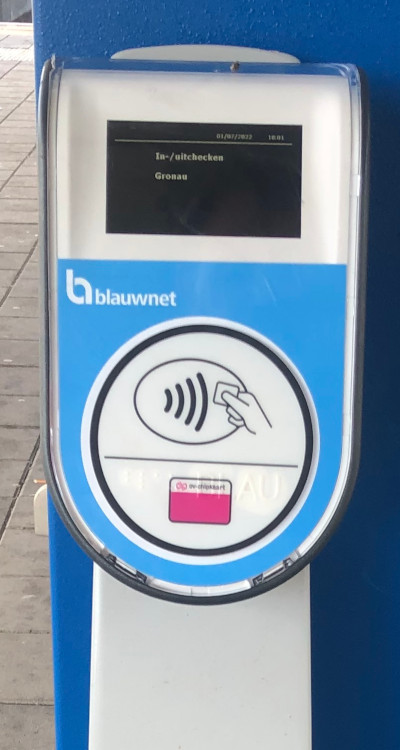
| 01-08-2021 | Enschede | Gronau | DB Regio | Blauwnet |
| 23-06-2022 | Arnhem | Elten, Emmerich and Praes | VIAS | Arriva / Breng, since December 2025 RRReis |
On the other regional railway connections to Germany (Hengelo - Bad Bentheim - Bielefeld and Venlo - Kaldenkirchen - Düsseldorf - Hamm) the OV-chipkaart cannot be used for travel to Germany.
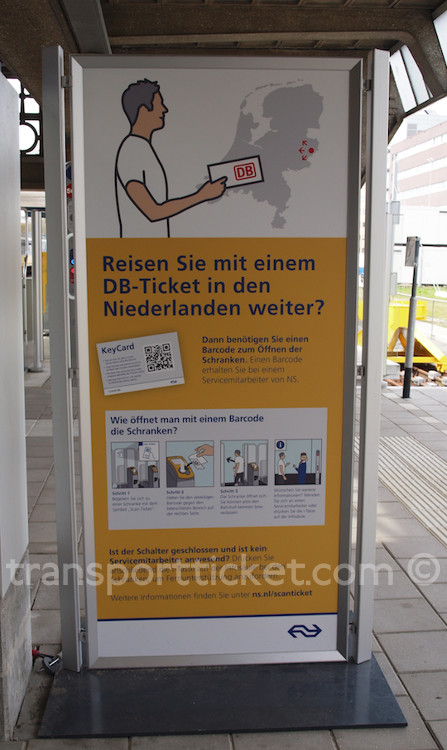
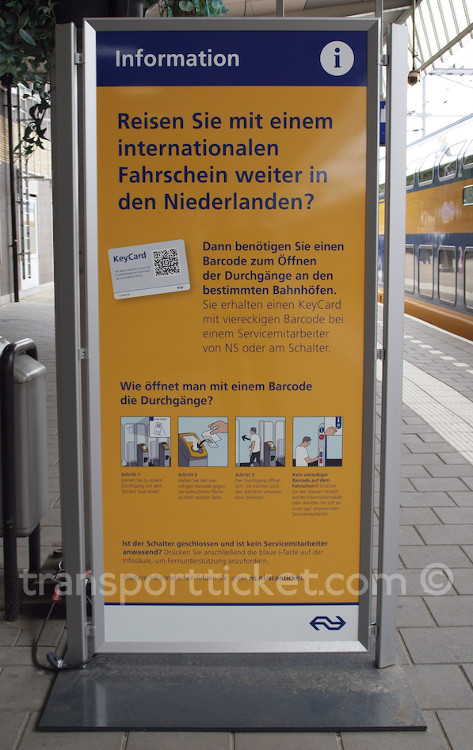
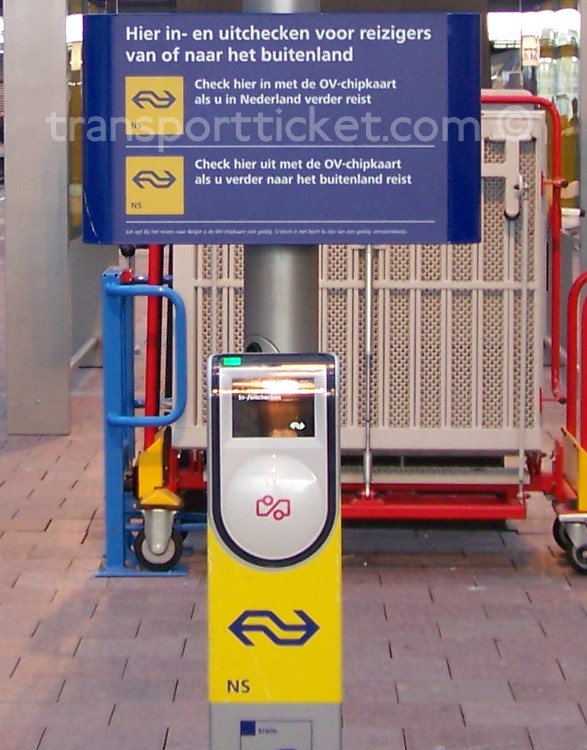
International travellers who want to enter or leave a station with ticket gates use a QR-code to open the gates. This QR-code can be printed on the ticket, but can also be on a key card. International travellers who begin or end their journey on national trains using the OV-chipkaart have to touch in or out at the interchange station. At some stations special transfer points are placed for that purpose.

Other usages
Trial paying in stores
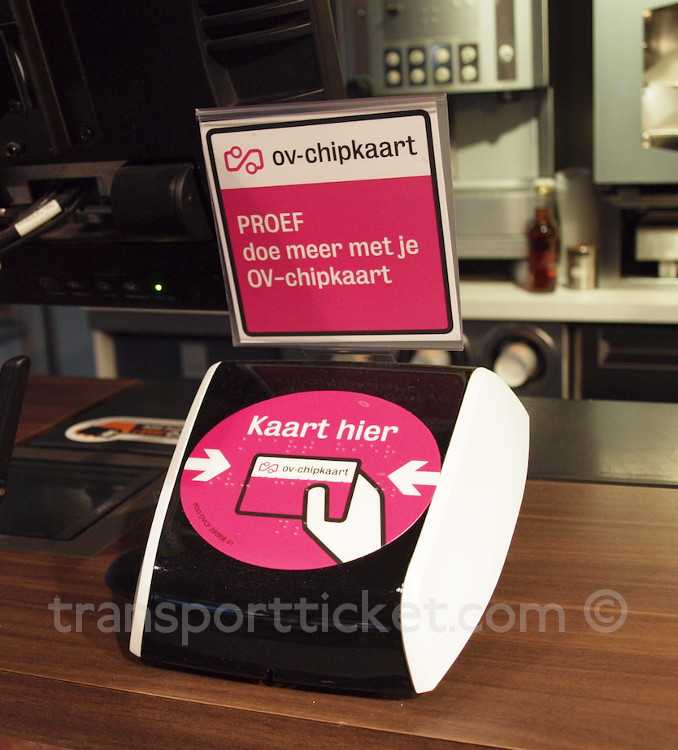
In January 2011 a test started to use the OV-chipkaart outside public transport. The OV-chipkaart could be used to pay contactless in the food stores at train station Amersfoort. Only a limited number of people were selected to register for this trial.
The results of this trial are unknown. It is no longer possible to use the OV-chipkaart in shops. However nowadays regular debit cards can be used for contactless payments.
OV-fiets
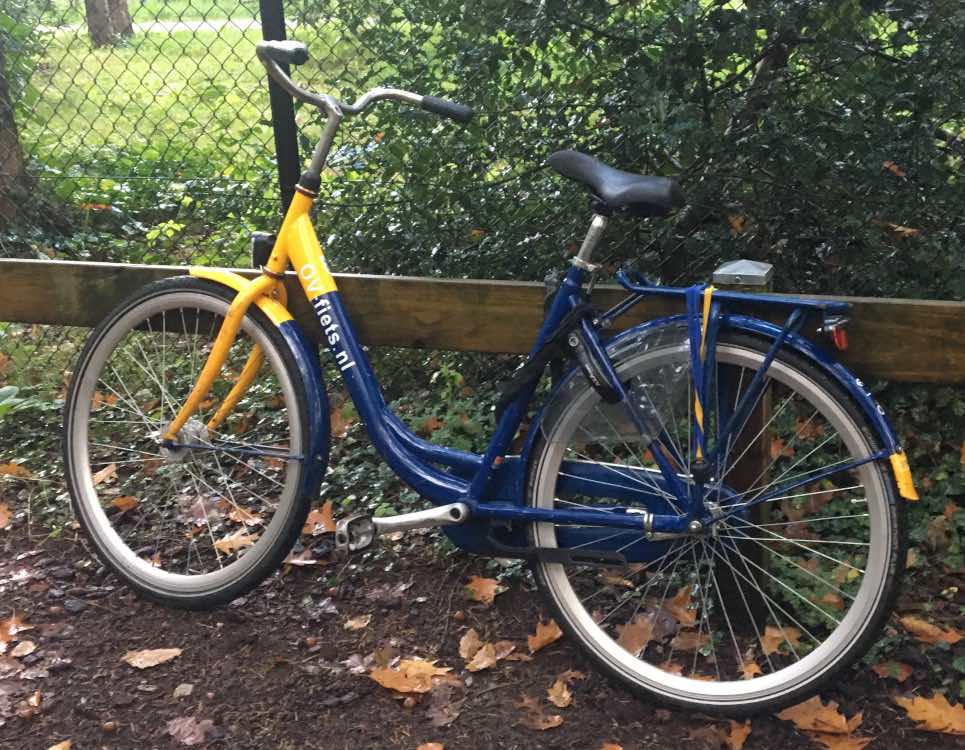
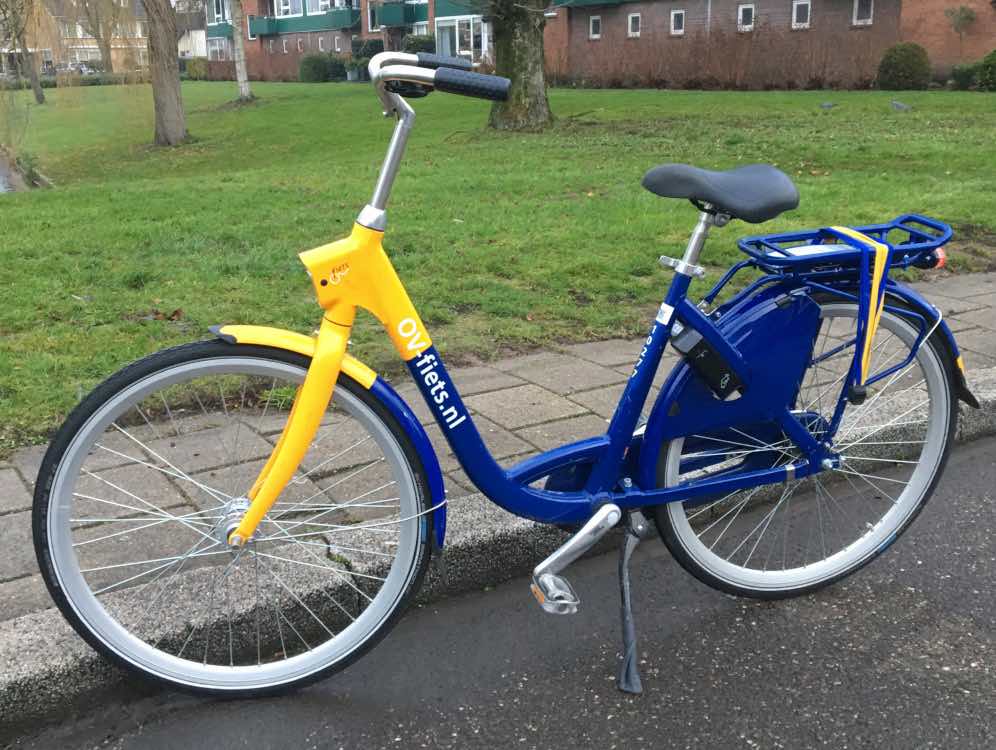
Since 2000, the Netherlands has a bicycle sharing programme at railway stations, called OV-fiets (literally: Public Transport bicycle). Since 2008, OV-fiets has been managed by NS. Before that, OV-fiets was an independent foundation. There are currently more than 280 stations where an OV-fiets can be rented.
An OV-chipkaart (with an OV-fiets subscription) is required to rent an OV-fiets. An OV-fiets is rented for a period of 24 hours. Payment is monthly via direct debit. The OV-chipkaart is not used as a payment system, but only for identification purposes.
The way to rent a bicycle depends on whether the bicycle parking facility at the station has staff or not. It has also changed over time. The bicycle parking facility staff member scanned the OV-chipkaart and the code on the bicycle key when issuing the bicycle. When returning the bicycle, the staff member only scans the key, which ends the rental period.
At stations that did not have a parking facility with staff, the OV-bikes were stored in lockers, near the outside bicycle parking. Scanning the OV-chipkaart opened the locker and allowed the bicycle to be removed. The rental ended by returning the bicycle to an empty locker.
Passengers could lock the bicycle during the rental period, but without ending it, with a standard ring lock (with a key).
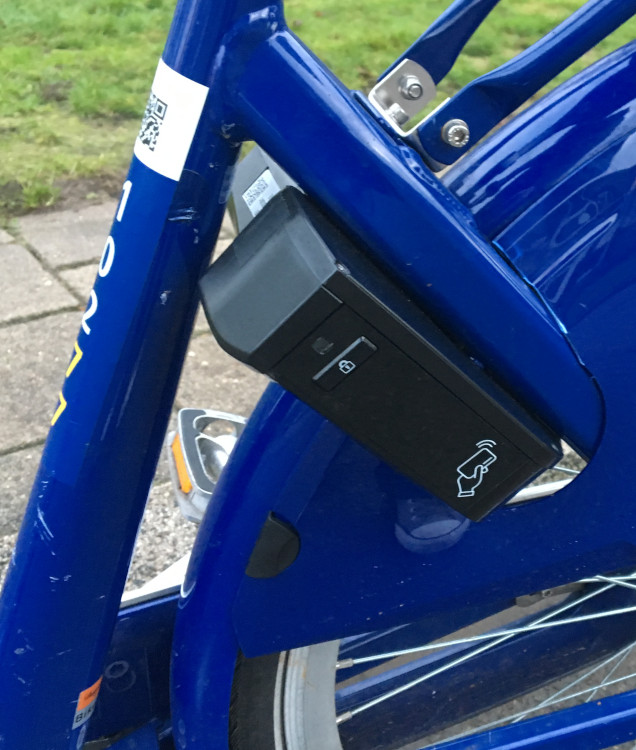
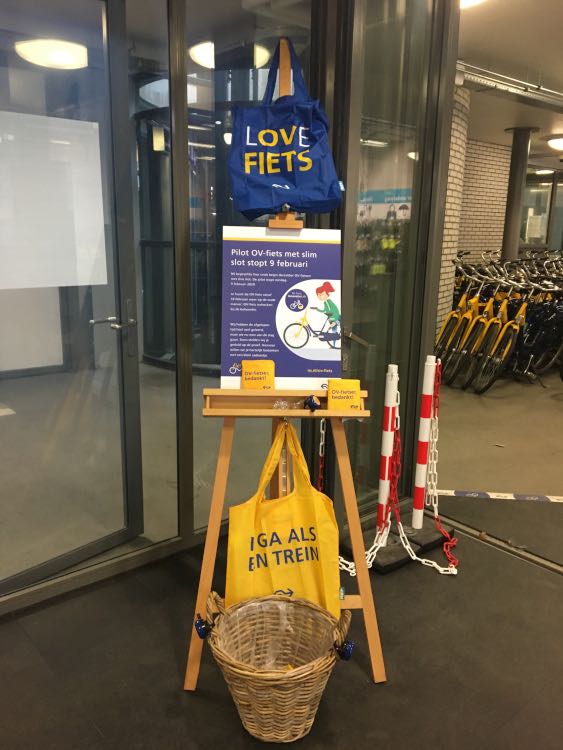
Between December 2019 and February 2020, the first test was conducted at Apeldoorn station with a new method of issuing bicycles. The ring lock was replaced by an electronic lock. Passengers open the lock with their OV-chipkaart, after which the rental period begins. No assistance from a member of staff is required.
It is still possible to lock the bicycle during the rental period. The lock can be closed by pressing a button on the lock. The lock can be opened again with the same OV-chipkaart used to rent the bicycle.
The rental period only ends when the bicycle is locked again in the bicycle parking at the station. The bicycle quot;recognises" that it is at its home base.
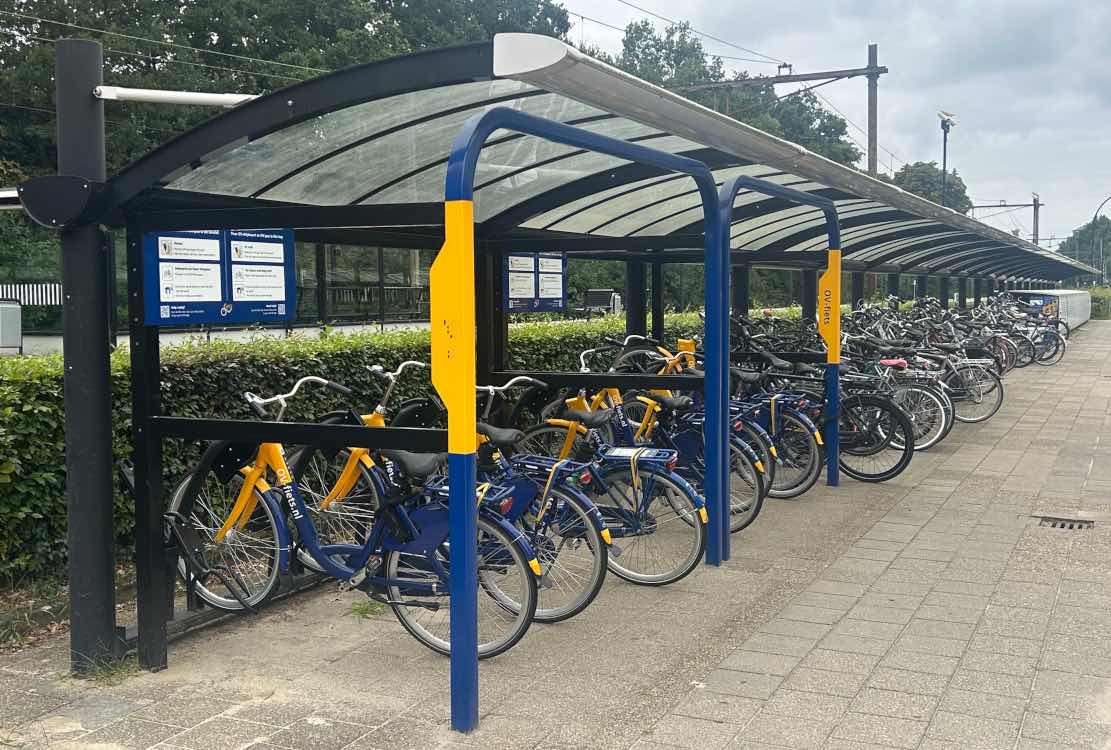
Since 2021, all rental locations have gradually switched to electronic locks. By 2025, all locations had made the switch. For stations with bicycles in lockers, this meant an additional change. The lockers were no longer needed. The bicycles are now stored in a separate part of the bicycle parking facility.

NS Zonetaxi
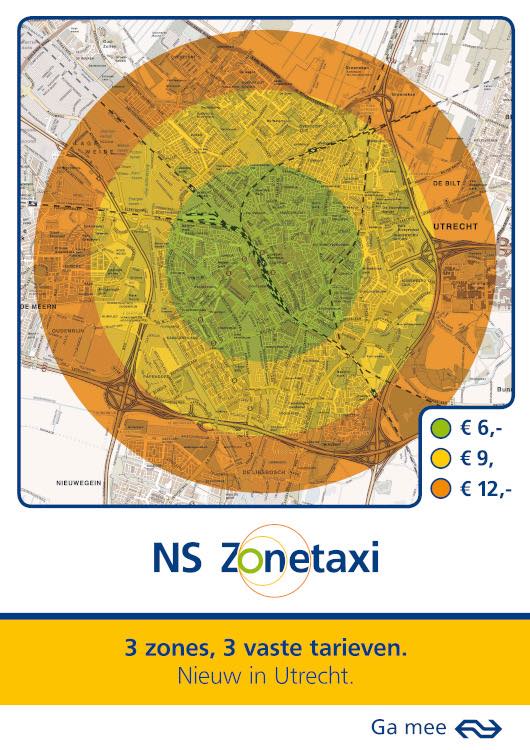
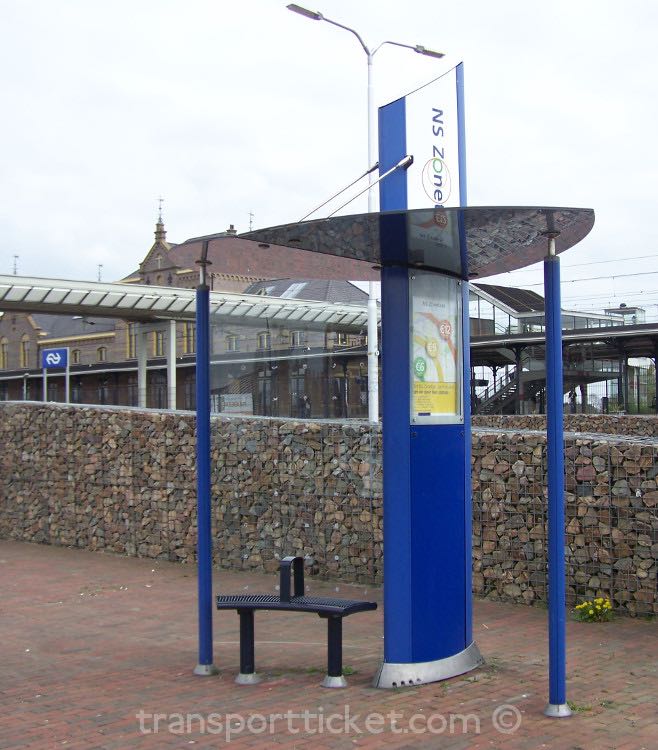
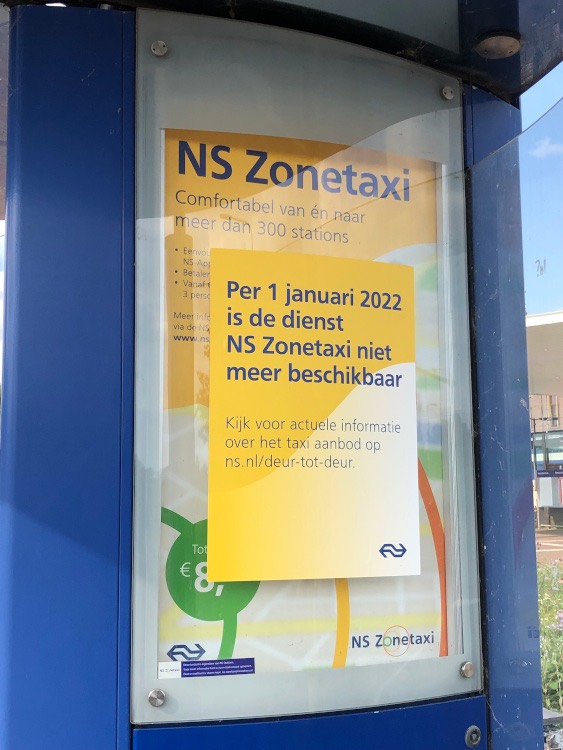
The NS Zonetaxi started in 2009 as a trial by Dutch Railways (NS) at five stations. In November 2012, it was rolled out nationwide to 23 stations. In 2018 and 2019, the Zonetaxi was available at 377 stations. After that, the number of stations decreased again. The last Zonetaxis ran at the end of 2021.
The Zonetaxi replaced the loss-making Treintaxi, which ceased operations completely at the end of 2013. NS hoped that Zonetaxi would enable the company to offer more door-to-door transport to and from stations.
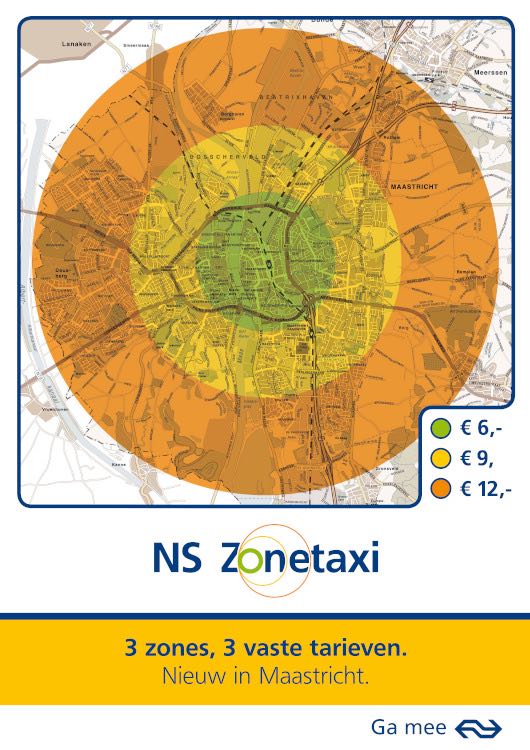
Passengers did not pay per kilometre, but a fixed amount per zone of approximately 2 kilometres. Depending on the distance, the prices were just below or just above the price of a regular taxi. For this amount, a maximum of 4 passengers could travel with the Zonetaxi.
| year | Zone 1 | Zone 2 | Zone 3 | Further |
|---|---|---|---|---|
| 2009 | € 6.00 | € 9.00 | € 12.00 | € 3.00 for each additional 2km |
| 2019 | € 7.30 | € 10.30 | € 13.30 | € 3.00 for each additional 2km |
| 2020 | € 8.50 | € 11.70 | € 14.90 | € 3.20 for each additional 2km |
| 2021 | € 8.60 | € 11.85 | € 15.10 | € 3.25 for each additional 2km |
From the national roll-out until 2018, passengers had to have a membership for the Zonetaxi. This membership was linked to the passenger's anonymous or personal OV-chipkaart. Payment for the journey was made by direct debit, not from the balance of the OV-chipkaart. In 2018, the membership requirement was dropped. As a result, there was no longer a need for an OV-chipkaart.
The continuation
The OV-chipkaart is now at the end of its life cycle. A new system, OVpay, has been introduced. OVpay uses the same equipment and therefore also works by checking in and out. The largest (technical) difference is, is that the data, like subscriptions, is no longer stored on the card, but online.
There are two different ways to use OVpay. Since 2023, passengers throughout the Netherlands have been able to check in and out with their bank card (debit card or credit card). Subscriptions are not yet available on bank cards. However, it is now possible to link age discounts to the bank card. It can also only be used to travel in second class.
Since November 2025, the OV-pas has been rolled out nationwide. Travellers can also add season tickets to this card. At present, not all season tickets are available and the OV-pas cannot yet be used for bicycle parking or OV-fiets, for example.